20 Best Odb2 Scanners (2026 Review Guide)
The Best Ranked Odb2 Scanner
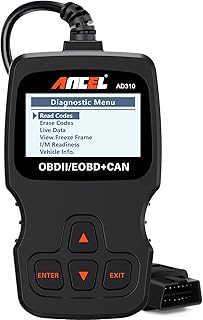
ANCEL AD310 OBD II Scanner
The ANCEL AD310 is a reliable and user-friendly OBD II scanner designed for vehicles from 1996 and newer. It effectively reads and clears check engine light codes related to emission systems, helping you quickly identify and resolve engine issues. Recommended by expert Scotty Kilmer, this compact and sturdy diagnostic tool provides fast and accurate results without the need for batteries, drawing power directly from your car. Its wide compatibility across various car models makes it a practical addition to any car owner's toolkit.
Key Features:
- Reads and clears check engine light and emission system trouble codes.
- Displays live data, freeze frame, I/M readiness, and vehicle information.
- Durable design with a 2.5-foot flexible cable and compact size (8.9 x 6.9 x 1.4 inches, 12 ounces).
- Provides fast and accurate diagnostics without batteries, powered from the vehicle's OBDII port.
- Supports all major OBDII protocols including KWP2000, J1850 VPW, ISO9141, J1850 PWM, and CAN.
- Compatible with 1996+ US, 2000+ EU, and most Asian cars, light trucks, SUVs, and newer CAN vehicles.
- Portable and easy to carry for home use or travel.
Pros
- Easy to use, even for those with no car repair experience.
- Wide vehicle compatibility covering many makes and models.
- Compact, lightweight, and durable design ideal for on-the-go diagnostics.
Cons
- Limited to emission-related engine diagnostics only.
- Not compatible with vehicles using OBDI interfaces.
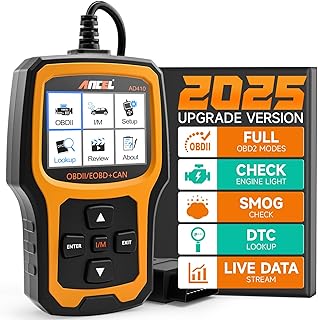
ANCEL AD410 OBD2 Scanner
The ANCEL AD410 OBD2 Scanner is a reliable and user-friendly diagnostic tool designed for all OBDII-compatible vehicles from 1996 onward. It quickly reads and clears engine fault codes, provides detailed code definitions, and performs enhanced tests like O2 sensor and EVAP system checks. Its clear color display and intuitive interface make it suitable for both beginners and experienced mechanics. Powered directly through the vehicle's OBDII port, this scanner supports multiple languages and offers extensive compatibility with various car models worldwide.
Key Features:
- Compatible with all 16-pin OBDII vehicles, including US, European, and Asian models from 1996 onwards
- Reads and clears stored and pending engine fault codes with over 42,000 built-in diagnostic code definitions
- Performs advanced diagnostics such as O2 sensor and EVAP system tests to improve fuel efficiency and reduce emissions
- Features a 2.4-inch color TFT LCD screen with an intuitive user interface for easy navigation
- Simple plug-and-play operation powered directly by the vehicle's OBDII port without batteries
- Includes multilingual support and updated software as of October 2024, with optional Windows-based USB updates
Pros
- Wide vehicle compatibility covering most OBDII cars internationally
- Comprehensive diagnostics focused on engine-related issues including emissions systems
- Clear, colorful display and easy-to-use interface ideal for all skill levels
- No battery or external power required, powered directly from the vehicle
- Regular product updates and dedicated customer support from ANCEL
Cons
- Does not support diagnostics for ABS, airbag, or transmission systems
- USB updates only available on Windows, not compatible with Mac OS
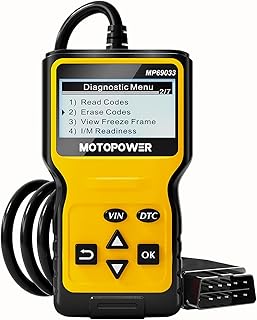
MOTOPOWER MP69033 OBD2 Scanner
The MOTOPOWER MP69033 is a versatile OBD2 scanner designed to diagnose engine issues on most vehicles manufactured since 1996. It features a built-in code library to help identify and clear engine fault codes, display real-time data, and retrieve vehicle information. The user-friendly 2.8-inch LCD with adjustable contrast is powered directly from the car, requiring no extra batteries. Compact and easy to use, this tool supports multiple protocols and languages, making it suitable for a wide range of cars.
Key Features:
- Built-in OBD2 code library to read and clear engine fault codes and view freeze frame data
- Supports 9 protocols for compatibility with most 1996 US, 2000 EU, and newer domestic or import vehicles
- Available in 6 languages including English, German, Dutch, Spanish, French, and Italian
- 2.8-inch backlit LCD screen with adjustable contrast, powered directly from the vehicle
- Compact design with a 2.5-foot flexible cable and 6 control buttons for easy navigation
- Does not support ABS, airbag, or oil service light systems outside the OBDII scope
- Protective film on the screen that can be removed if scratched, with customer service support for screen issues
- Simple connection by plugging into the OBDII port and turning the ignition on; live data requires engine start
Pros
- Wide vehicle compatibility across multiple OBDII protocols and languages
- User-friendly interface with backlit display and easy navigation buttons
- No battery needed, powered by the vehicle's OBDII port
- Clear instructions and reliable customer support
Cons
- Does not support ABS, airbag, or other non-OBDII system diagnostics
- Limited to engine-related fault codes only
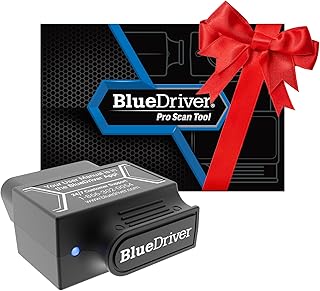
BlueDriver Bluetooth OBDII Scan Tool
The BlueDriver Bluetooth Pro OBDII Scan Tool is a professional-grade diagnostic device compatible with iPhone and Android devices. It allows you to easily read and clear trouble codes, including ABS, Airbag, SRS, and TPMS, on gas-powered vehicles from 1996 onwards. With Bluetooth wireless connectivity, detailed repair reports, live data monitoring, and an intuitive app featuring repair videos, BlueDriver makes car diagnostics accessible to both beginners and experienced users without any subscription fees.
Key Features:
- Professional OBD2 scanner for reading and clearing car trouble codes and check engine lights.
- Advanced diagnostics including ABS, Airbag, SRS, and TPMS code reading and clearing.
- Unlimited repair reports with possible causes and fixes, plus live real-time vehicle data.
- Wireless Bluetooth connection to your phone or tablet without cables.
- User-friendly app providing access to a large database of step-by-step repair videos.
- No subscription fees or in-app purchases; one-time purchase with full features.
- Compatible with all gas-powered vehicles from 1996 and newer, including major brands like GM, Ford, Toyota, Honda, BMW, and more.
- 24/7 professional support via phone and in-app chat for troubleshooting and assistance.
Pros
- Comprehensive diagnostics typically available only to mechanics.
- Wireless connection offers convenience and ease of use.
- No hidden fees or subscription costs, saving money over time.
- Extensive repair database and live data help users understand and fix issues.
- Wide vehicle compatibility covering many popular car brands.
Cons
- Only compatible with gas-powered vehicles, excluding diesel or electric models.
- Advanced features may require some learning for complete novices.
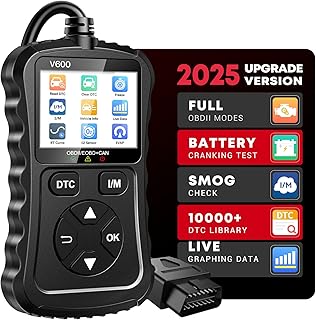
OBD2 Scanner Code Reader
The XIAUODO OBD2 Scanner is a versatile and user-friendly diagnostic tool designed for all OBDII protocol vehicles since 1996. It offers comprehensive vehicle diagnostics with a large fault code database, real-time data streaming, and graphical analysis. Its upgraded features include a real-time voltage test and an enhanced chip for faster and more accurate diagnostics. The sturdy, compact design with an easy-to-navigate interface makes it suitable for both beginners and professionals. Compatible with a wide range of US, EU, and Asian cars, this scanner supports multiple languages and comes with reliable customer support.
Key Features:
- Comprehensive diagnostics with a database of over 30,000 fault codes to read and clear engine problems.
- Supports real-time data streaming, freeze frame data, MIL status, and I/M readiness monitoring.
- Real-time voltage testing function to monitor the vehicle's electrical system.
- Built-in power indicator light for stable connection and scanner status.
- Enhanced chip for faster data processing and smoother fault handling.
- Durable, impact-resistant housing with a non-slip grip and flexible cable.
- Compact, lightweight design with a bright color screen and 6 intuitive buttons including I/M and DTC shortcuts.
- Plug-and-play operation ideal for beginners and professionals.
- Compatible with most 1996 and newer US, EU, and Asian vehicles, supporting all OBDII protocols.
- Supports 10 languages including English, German, Spanish, and French.
- 90-day warranty with 24/7 customer support.
Pros
- Wide vehicle compatibility across multiple brands and protocols.
- Includes voltage testing for in-depth electrical system monitoring.
- User-friendly design perfect for both beginners and experienced mechanics.
- Fast and accurate diagnostics with enhanced chip technology.
- Multi-language support broadens usability globally.
Cons
- Cannot diagnose heavy-duty pickup trucks, mini trucks, motorcycles, or trucks.
- Some advanced code clearing may require dealer-level tools if the repair is incomplete.
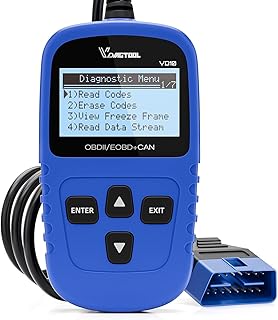
VDIAGTOOL VD10 OBD2 Scanner
The VDIAGTOOL VD10 OBD2 Scanner is an essential diagnostic tool for car owners and hobbyists. Easy to use with a simple plug-and-play design, it helps you quickly identify and clear engine fault codes, monitor live vehicle data, and check emissions readiness. Compatible with most OBDII vehicles, this scanner offers reliable insights into your car's performance and health, making it easier to maintain and troubleshoot issues before they become serious.
Key Features:
- Easy-to-use OBD2 scanner that connects directly to your vehicle's OBDII port for instant diagnostics.
- Reads and clears generic and manufacturer-specific fault codes with built-in definitions for over 3,000 codes.
- Displays live data from sensors including engine RPM, intake air temperature, and fuel trim for accurate diagnostics.
- Retrieves freeze frame data to help identify conditions when a fault occurs.
- Checks I/M readiness monitors to ensure your vehicle passes emissions inspections.
- Compatible with 99% of OBDII vehicles including US (post-1996), EU (post-2006), and Asian (post-2009) models.
- No batteries needed; powered directly from the vehicle's data link connector with a clear backlit LCD screen.
- Includes 3-year warranty, lifetime free updates, and supports 6 languages (English, French, German, Spanish, Italian, Russian).
Pros
- User-friendly plug-and-play operation suitable for beginners and experienced users.
- Comprehensive code lookup with on-screen definitions eliminates guesswork.
- Wide vehicle compatibility covering most OBDII compliant cars worldwide.
Cons
- Display is basic with only 2 lines, which may limit detailed data viewing.
- Does not support advanced manufacturer-specific functions beyond code reading.
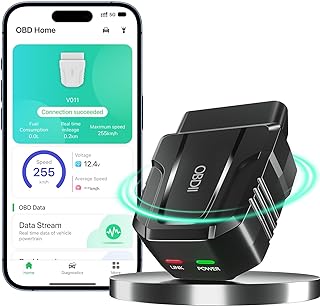
Bluetooth OBD2 Scanner Diagnostic Tool
The UMEIJA V011 OBD2 Bluetooth Scanner is a versatile automotive diagnostic tool compatible with most vehicles since 1996. It offers comprehensive performance testing, live data monitoring, and error code reading through a user-friendly app available for both iOS and Android. With fast Bluetooth 5.4 connectivity and support for multiple languages, it helps drivers diagnose and clear engine codes, saving time and repair costs. Ideal for beginners and experts alike, this wireless scanner delivers clear data visualization and in-depth vehicle insights right on your smartphone.
Key Features:
- Comprehensive diagnostics including fast DTC reading, emission readiness, check engine light reset, live data streaming, VIN retrieval, freeze frame, and sensor data.
- User-friendly app that interprets error codes, suggests fixes, and includes how-to guides and video tutorials to help avoid unnecessary repairs.
- Clear data visualization with easy-to-understand charts showing key parameters like engine coolant temperature, speed, and voltage.
- Compatible with over 96% of car models from 1996 onward, including major brands like Toyota, Honda, Ford, BMW, and more, supporting multiple languages.
- Upgraded Bluetooth 5.4 technology for faster, stable wireless connection without cables.
- Free dedicated app that ensures smooth compatibility across Android and iOS devices with simple setup via QR code.
- Includes a detailed manual and 24/7 customer support; recommended to unplug after use to prevent battery drain.
Pros
- Wide vehicle compatibility covering most makes and models.
- Easy to use app with clear data visualization and helpful repair suggestions.
- Fast and reliable Bluetooth 5.4 wireless connection.
Cons
- Fault codes can only be cleared after the vehicle has been properly repaired, limiting immediate error code resets.
- Requires car ignition to be on and Bluetooth enabled for proper connectivity.
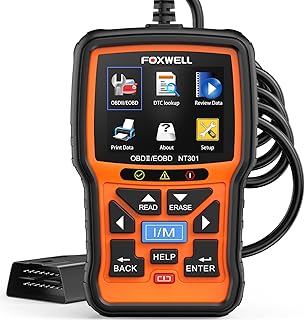
FOXWELL NT301 OBD2 Scanner
The FOXWELL NT301 OBD2 Scanner is a professional-grade diagnostic tool designed to read and clear check engine light codes for most 12V vehicles. It offers live data streaming, emissions readiness checks, and vehicle identification, making it an essential device for both home users and mechanics. With its easy plug-and-play design, clear color display, and broad vehicle compatibility, the NT301 helps users quickly diagnose engine issues and monitor sensor data to keep their vehicles running smoothly.
Key Features:
- Reads diagnostic trouble codes (DTCs), displays emissions readiness status, clears check engine light, resets monitors, and retrieves vehicle VIN.
- Provides live data graphing and logging to monitor real-time sensor information and identify potential issues.
- Compatible with most 12V cars, SUVs, light trucks, and diesel vehicles from 1996 US, 2000 EU, and Asian markets supporting OBDII protocols like KWP2000, J1850 VPW, ISO9141, J1850 PWM, and CAN.
- Simple operation with hotkeys for reading and erasing codes and emission readiness checks, indicated by color LEDs and audible alerts.
- No battery required; powered directly through the vehicle's OBD2 port with no need for pre-use updates.
- Features a 2.8-inch color screen, lifetime free updates, printer compatibility, and a patented design supported by a dedicated technical team.
- One-year seller warranty with responsive customer service including replacement or refund for defective or incorrect items.
Pros
- Accurately reads and clears engine fault codes with live data analysis.
- Easy to use with plug-and-play setup and clear, colorful display.
- Supports a wide range of vehicle makes and models worldwide.
- No battery needed, powered via OBD2 port.
- Free lifetime software updates and good customer support.
Cons
- Does not support advanced system diagnostics like ABS, TPMS, or battery registration.
- Limited special functions such as oil reset or programming are not included.
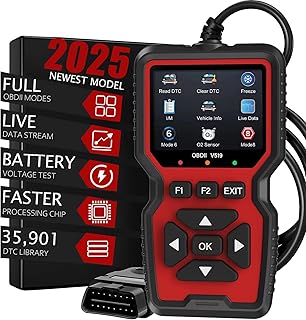
OBD2 Scanner with Reset Functions
The WEJOWE OBD2 Scanner Diagnostic Tool is a powerful and user-friendly device designed to help car owners and mechanics quickly diagnose and resolve engine issues. Compatible with most vehicles manufactured since 1996, it features a vast database of over 35,000 fault codes to identify problems accurately without searching online. With capabilities like reading and clearing codes, viewing live data, battery voltage testing, and printing diagnostic reports, this compact scanner is an essential tool for maintaining your vehicle and saving on repair costs.
Key Features:
- Includes a built-in database of 35,901 diagnostic trouble codes (DTCs) for accurate fault identification.
- Supports reading and clearing engine codes, checking I/M readiness, viewing freeze frame data, retrieving vehicle VIN, and battery voltage tests.
- Compatible with 98% of vehicles manufactured after 1996, including US, European, and Asian models with a 16-pin OBD2 port.
- Supports 10 languages: English, French, Spanish, German, Chinese, Russian, Italian, Japanese, Portuguese, and Dutch.
- Allows live data streaming and DTC replay with the ability to connect to a computer for convenient printing of diagnostic reports.
- Compact design includes a storage bag and Type-C cable for easy portability and connectivity.
- Offers lifetime free software updates to keep the device current with the latest features.
Pros
- Extensive built-in DTC library helps quickly identify faults without needing to look up codes online.
- Wide vehicle compatibility covers most cars made since 1996 across multiple regions.
- Multi-language support enhances accessibility for users worldwide.
- Data printing feature helps maintain records and avoid unnecessary repair shop visits.
- Compact and portable with useful accessories included.
Cons
- Some advanced diagnostic features may require a learning curve for beginners.
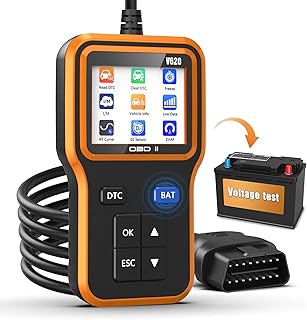
OBD2 Scanner with Battery Tester
The UMEIJA OBD2 Scanner is a versatile diagnostic tool designed for all OBDII-compliant vehicles since 1996. It quickly reads and clears engine codes, provides live data streams with graphical displays, and checks emission readiness. Compact and durable, it features an upgraded microprocessor for fast and accurate diagnostics. Also, it includes a built-in battery tester to monitor battery health, making it ideal for both DIY car enthusiasts and professional mechanics.
Key Features:
- Reads and clears engine error codes, displays live data with graphs, and views freeze frame data.
- Checks MIL and I/M readiness status along with detailed vehicle indicator information.
- Supports all OBDII protocols including KWP2000, J1850 VPW, ISO9141, J1850 PWM, and CAN.
- Compatible with most 1996 and newer US cars, 2000 and newer EU and Asian vehicles, light trucks, SUVs, and CAN-equipped models.
- Includes a 2.5-foot heavy-duty cable with a durable 16-pin connector for reliable connection.
- Upgraded microprocessor delivers fast, accurate results with a user-friendly 6-button interface.
- Built-in battery tester monitors battery life and voltage to prevent unexpected failures.
- Offers advanced diagnostics like O2 sensor and EVAP system tests to improve fuel efficiency and reduce emissions.
- Compact and rugged design measures 8.9 x 6.9 x 1.4 inches and weighs 12 ounces, ideal for easy handling.
- Supports multiple languages including English, German, French, Spanish, Finnish, Dutch, Russian, and Portuguese.
- Backed by a strong service guarantee and professional customer support.
Pros
- Wide vehicle compatibility covers most cars and trucks worldwide built since 1996.
- Fast and accurate diagnostics with easy-to-understand graphical data display.
- Includes built-in battery tester to monitor battery health and prevent failures.
- Rugged design with a heavy-duty cable ensures durability in tough environments.
- Multi-language support makes it accessible for international users.
Cons
- Does not support ABS codes or detect gearbox faults.
- Cannot test output current or battery life, only battery voltage.
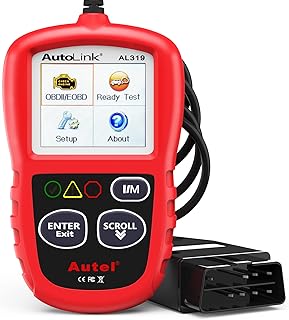
Autel AL319 OBD2 Scanner
The Autel Professional OBD2 Scanner AL319 is a reliable and easy-to-use diagnostic tool designed for all OBD II vehicles from 1996 onwards. It helps you quickly identify and reset engine fault codes, view live data, and monitor freeze frame data to diagnose issues efficiently. With support for multiple languages and a clear color display, this scanner is suitable for both beginners and experienced DIYers seeking to maintain their vehicles without costly repairs.
Key Features:
- Reads diagnostic trouble codes (DTCs) and turns off the Check Engine Light (CEL)
- Displays live data and freeze frame information to identify vehicle issues
- Supports OBD II protocol vehicles from 1996 and newer, including major brands like Toyota, Nissan, Honda, and Ford
- Compatible with 7 languages such as English, French, and Spanish
- Plug and play design with an easy-to-use interface suitable for all users
- Features patented one-click I/M readiness check, TFT color screen, built-in speaker, and LED indicators
- Long, manageable cable with no battery required
- Includes 12-month warranty and lifetime free software updates
- Access to technical support via Q&A, email, and hotline
Pros
- Simple plug-and-play operation ideal for DIY users
- Multilingual support broadens usability worldwide
- Clear TFT display with helpful indicators improves user experience
- Lifetime free updates keep the tool current
- Compatible with a wide range of vehicles post-1996
Cons
- Limited advanced diagnostic features compared to professional-grade scanners
- Display size may be small for some users
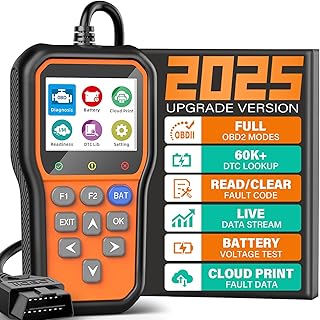
BluSon YM319 OBD2 Scanner
The BluSon YM319 OBD2 Scanner is a reliable diagnostic tool designed to help car owners quickly identify and clear engine fault codes. Equipped with a comprehensive database of over 63,000 error codes, it offers detailed insights including live data monitoring, battery health checks, and freeze frame data. Its user-friendly interface with a bright color screen, customizable shortcut keys, and cloud printing capabilities make diagnostics simple and efficient. Compatible with most OBD2 vehicles since 1996 and supporting multiple languages, this scanner is an essential gadget for vehicle maintenance and troubleshooting.
Key Features:
- Reads and clears engine fault codes with a database of over 63,000 codes
- Displays freeze frame data, I/M readiness status, oxygen sensor tests, and EVAP system diagnostics
- One-click battery health check continuously monitors voltage and condition
- Records live data and plots data curves to capture intermittent faults
- Cloud printing allows generating and sharing diagnostic reports without a printer
- Plug-and-play design with no battery needed, featuring a 2.4-inch HD color screen with adjustable brightness
- Red, green, and yellow indicator lights provide quick vehicle status assessment
- Customizable F1 and F2 shortcut keys for frequently used functions
- Supports all OBDII protocols and works with most 1996 and newer cars, trucks, SUVs, and light vehicles
- Offers 13 language options including English, German, French, Spanish, Russian, and Portuguese
Pros
- Comprehensive fault code database ensures precise diagnostics
- Battery health monitoring helps prevent unexpected failures
- Cloud printing enables easy report sharing without extra equipment
- User-friendly with a clear color display and customizable shortcuts
- Wide vehicle compatibility and multi-language support
Cons
- Only supports engine fault codes; does not cover ABS, SRS, or transmission systems
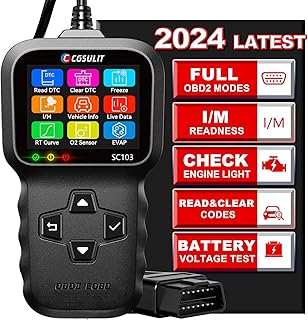
CGSULIT SC103 OBD2 Scanner
The CGSULIT SC103 OBD2 Scanner is a reliable and user-friendly automotive diagnostic tool perfect for both DIY car owners and professionals. Compatible with most vehicles from 1996 onwards, it allows you to read and clear engine codes, monitor live data streams, check emissions readiness, and perform voltage tests. Its bright 2.8-inch color display presents sensor data clearly in text and graph formats, making vehicle diagnostics straightforward and accessible without costly mechanic visits.
Key Features:
- Reads and clears engine codes, checks I/M readiness, and turns off the Check Engine Light.
- Compatible with all OBDII protocols and works with US (since 1996), EU (since 2003), and Asian vehicles (since 2008), including 12V light trucks and SUVs.
- Compact design with a vibrant 2.8-inch color screen and fast, accurate performance using an industrial-grade chip.
- Displays live vehicle sensor data in both text and graphical formats, including speed, engine load, coolant temperature, and RPM.
- Includes I/M monitor readiness and a built-in DTC library to assist with diagnostics and repairs.
- Comes with a 3-year warranty, 30-day return policy, and 24/7 customer support.
Pros
- Wide compatibility with different vehicle makes and models.
- Easy-to-read color display showing both text and graphical data.
- No batteries required; plug and play functionality.
Cons
- Does not support new energy vehicles without traditional combustion engines.
- Requires prior issue fixes before resetting codes to avoid recurring errors.
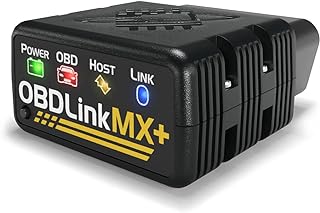
OBDLink MX+ Bluetooth Scanner
The OBDLink MX+ OBD2 Bluetooth Scanner is a versatile diagnostic tool that works seamlessly with iPhone, Android devices, and Windows PCs. It offers extensive compatibility with popular car apps and provides enhanced support for a wide range of vehicle brands, making it ideal for both professional mechanics and car enthusiasts. With the ability to read and clear codes, view live data, and protect your vehicle's battery, this scanner helps you stay on top of your car's health with ease.
Key Features:
- Compatible with iPhone, Android, and Windows devices for diagnostic scanning
- Works with popular apps like FORScan, Torque, BimmerCode, Dashcommand, AlfaOBD, and Carista
- Enhanced support for Ford, GM, Mazda, Nissan/Infiniti, Toyota/Lexus/Scion, Honda, Hyundai, and Kia vehicles
- Reads and clears Check Engine Light codes; provides live data for ABS, SRS, TPMS, and more
- Includes over-voltage and battery drain protection with free firmware updates
Pros
- Wide compatibility with devices and car brands
- Supports many popular diagnostic and coding apps
- Protects vehicle battery and offers regular firmware updates
Cons
- May require advanced app knowledge for full functionality
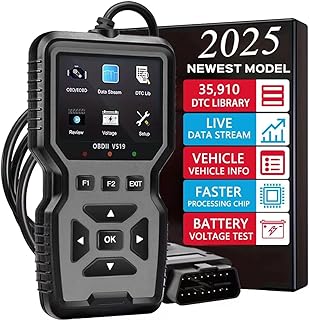
OBD2 Scanner with Data Stream
The OnRetul V519 OBD2 Scanner is a powerful diagnostics tool designed for both DIY enthusiasts and professional mechanics. It reads and clears engine trouble codes, displays live data such as battery voltage and RPM, and helps identify issues like sensor failures or misfires. Its durable, ergonomic design and plug-and-play operation make it reliable and easy to use across all OBD2-compliant vehicles from 1996 onwards.
Key Features:
- Reads and clears engine fault codes (P0, P1, P2, P3) for cars, trucks, and SUVs
- Displays real-time data including battery voltage, RPM, and engine load
- Monitors and records live data trends to help detect failing components early
- Durable ABS housing withstands temperatures from -4F to 158F with ergonomic grip
- Powered directly from the vehicle's OBD2 port , no batteries required
- Compatible with all OBD2 vehicles (1996+ US, 2000+ EU, global models) including gas, diesel, and hybrid
- Includes a database of over 35,900 fault codes with definitions and repair tips
Pros
- Comprehensive diagnostic capabilities for a wide range of vehicles
- Real-time data monitoring helps prevent costly repairs
- Sturdy construction and easy-to-use interface
- Plug-and-play setup with no need for batteries
- Extensive fault code library with helpful repair guidance
Cons
- May require some technical knowledge to interpret advanced data accurately
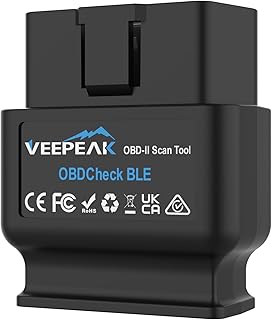
Veepeak OBDCheck BLE Scanner
The Veepeak OBDCheck BLE is a wireless Bluetooth OBD II scanner compatible with iOS and Android devices, designed to read and clear check engine light codes, display live sensor data, and monitor vehicle health. It supports most cars and light trucks from 1996 onward in the US and works seamlessly with popular diagnostic apps, making it a convenient tool for basic vehicle diagnostics on the go.
Key Features:
- Reads and clears generic OBD-II trouble codes including check engine light (CEL/MIL)
- Displays freeze frame data, I/M readiness, and live sensor information to monitor vehicle status
- Compatible with most 1996 and newer cars and light trucks in the US; limited EV support
- Supports Bluetooth LE for iOS and both Bluetooth LE and Classic for Android devices
- Works with popular apps such as Car Scanner, Torque (Android), BimmerCode, BimmerLink, OBD JScan, and Dr. Prius
- Advanced diagnostics like ABS, SRS, TPMS, and transmission temperature are supported only on certain makes/models via specific apps
- Does not support advanced functions like oil light reset, EPB reset, relearning, or service functions on most vehicles
Pros
- Broad compatibility with vehicles from 1996 onwards
- Supports multiple popular diagnostic apps across iOS and Android
- Provides essential diagnostic functions and live data monitoring wirelessly
Cons
- Limited support for advanced diagnostic functions and newer model-specific features
- Some apps and advanced features require additional purchases
- May not support some Android head units and certain electric vehicles
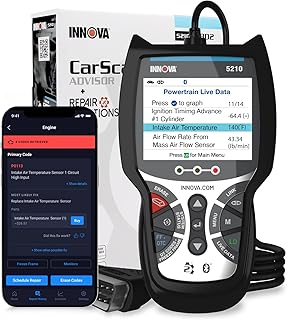
Innova 5210 OBD2 Scanner
The Innova 5210 is a versatile OBD2 scanner and engine code reader designed for most vehicles from 1996 and newer. It combines engine diagnostics with a battery tester, providing real-time live data such as RPM and engine temperature. Featuring oil reset and smog check readiness, it helps you maintain your car easily. The scanner works with a free app offering verified repair guidance without any subscription fees, making it a reliable tool for both DIYers and mechanics.
Key Features:
- Combines OBD2 engine diagnostics with a car battery tester to check alternator health and prevent breakdowns.
- Displays live real-time data including RPM, engine temperature, fuel trims, and oxygen sensor readings.
- Compatible with most US, Asian, and European vehicles from 1996 and newer; reads and clears engine and ABS trouble codes.
- Includes oil light reset and emissions readiness status to assist with maintenance and smog tests.
- Provides verified repair fixes through a free RepairSolutions2 app with step-by-step guidance and cost estimates, no subscription required.
- Check compatibility with Innova's coverage checker as features may vary by vehicle make, model, and year.
Pros
- Combines multiple diagnostic functions in one device, saving time and money.
- Real-time data helps identify issues quickly and accurately.
- Free app with no subscriptions offers trusted repair advice from certified mechanics.
Cons
- ABS code coverage may be limited depending on the vehicle.
- Some advanced features require verifying vehicle compatibility beforehand.
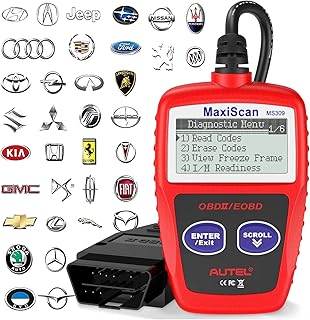
Autel MS309 OBD2 Scanner
The Autel OBD2 Scanner MS309 is a user-friendly diagnostic tool designed for most standard OBD II vehicles from 1996 onward in the US. It reads and clears engine fault codes, displays live data like Diagnostic Trouble Codes (DTCs) with definitions, and helps identify emission issues. Ideal for DIY car enthusiasts, it supports key functions such as freeze frame data retrieval, vehicle information access, and readiness monitor checks for smog inspections. This plug-and-play scanner does not require registration and comes with a 12-month warranty and lifetime technical support.
Key Features:
- Compatible with standard OBD II vehicles (1996 and newer) in the US market
- Cannot clear codes for FCA vehicles with Safe Gateway (SGW) system manufactured after 2017
- Does not support TPMS or advanced service functions; basic OBDII code reader only
- Plug-and-play operation with no registration required; connects via standard 16-pin OBDII port
- Reads and clears generic, manufacturer-specific, and pending codes with on-screen DTC definitions
- Retrieves freeze frame data and vehicle details such as VIN, Calibration ID, and CVNs
- Turns off the Check Engine Light by resetting emission-related issues
- Checks I/M Readiness status to help pass smog checks by monitoring key emission systems
- Includes 12-month warranty and lifetime free technical support with responsive customer service
Pros
- Easy to use with plug-and-play setup and no registration required
- Displays clear DTC definitions on screen, saving time searching for code meanings
- Covers a wide range of OBDII vehicles from 1996 onward
- Provides useful freeze frame data and vehicle information helpful for used car buyers
- Helps ensure your vehicle is ready for annual smog checks
- Good warranty and reliable customer support
Cons
- Does not support advanced diagnostic or service features like TPMS
- Cannot clear codes on FCA vehicles made after 2017 due to security restrictions
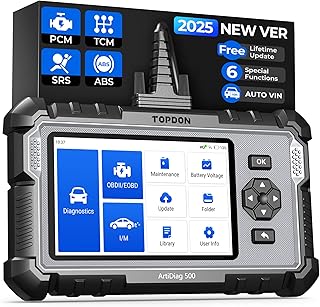
TOPDON AD500 OBD2 Scanner
The TOPDON AD500 OBD2 scanner is a versatile diagnostic tool designed for both DIY car enthusiasts and professional users. It offers comprehensive engine, transmission, ABS, and SRS system diagnostics alongside six essential reset functions such as throttle adaptation, oil light reset, and battery management. Featuring a 5-inch touchscreen, AutoVIN technology for easy vehicle identification, real-time live data streaming, and global compatibility with over 67 car brands, the AD500 ensures efficient and accurate vehicle troubleshooting with lifetime Wi-Fi updates.
Key Features:
- Full OBD2 functions with 4-system diagnostics for engine, transmission, ABS, and SRS
- Six reset functions including throttle adaptation, oil, steering angle, TPMS, battery management, and electronic parking brake
- AutoVIN technology for automatic vehicle identification and streamlined diagnostics
- Live data display with up to 4 data streams shown simultaneously and data storing for future review
- Supports over 67 car brands and 10,000 models worldwide with 12 language options
- 5-inch touchscreen plus physical buttons, 2GB RAM, 32GB storage, 3350mAh battery, ergonomic design
- Real-time battery voltage monitoring and online diagnostic feedback
- Compatible with Android 11 devices
- Lifetime free Wi-Fi updates included
Pros
- Comprehensive diagnostics covering major vehicle systems and maintenance functions
- User-friendly interface with both touchscreen and physical buttons
- Wide vehicle compatibility and multilingual support
- AutoVIN simplifies vehicle identification and testing
- Robust hardware with ample memory and battery life
Cons
- Some advanced features may require familiarity with vehicle systems to use effectively
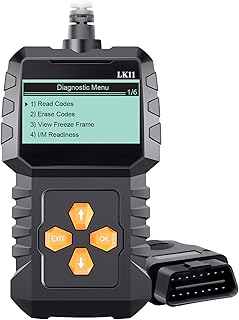
OBD2 Scanner LK11
The LeeKooLuu LK11 OBD2 Scanner offers a straightforward plug-and-play experience to diagnose your vehicle quickly and accurately. Designed for both DIY enthusiasts and professional mechanics, it allows you to read and clear engine fault codes, view live data, and analyze freeze frame details. Compatible with most cars made since 1996, this scanner helps you maintain engine performance, avoid costly repairs, and gain deeper insights into your car's health with features like I/M readiness and advanced vehicle information retrieval.
Key Features:
- Plug-and-play design, easy to use with no technical knowledge required
- Reads and clears engine fault codes and provides live data
- Displays freeze frame data to help diagnose problems
- Supports I/M readiness for emissions testing
- Retrieves detailed vehicle information including VIN, Calibration ID, and CVN
- Monitors engine coolant temperature and vehicle speed
Pros
- Simple setup and operation ideal for both beginners and professionals
- Comprehensive diagnostics help prevent costly repairs
- Accurately reads a wide range of engine and emissions data
Cons
- Limited to vehicles manufactured from 1996 onward
- Display and interface may be basic compared to higher-end models
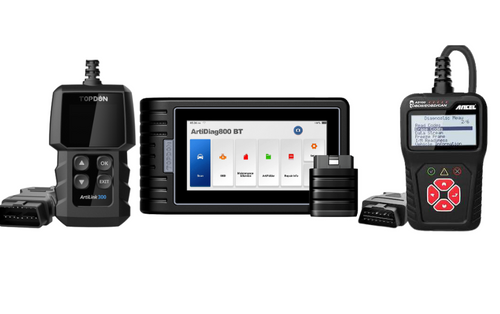
Welcome to Your Car's Language Class
By the way, Cars talk all the time, through that cryptic check engine light, weird idling or sudden stumbles when you hit the gas. If you've ever felt clueless staring at your dashboard, an OBD2 scanner is your translator. No more guessing games or surprise repair bills.
Why Every Driver Needs an OBD2 Scanner
Honestly, ignoring that blinking light is like skipping your dentist appointment, sure, you can do it, but you're asking for trouble later. A simple plug-in tool can reveal exactly what's going on under the hood. a few quick steps and you're staring at a trouble code, complete with a brief description. No more calling your buddy at 2 a.m. asking, "What does P0420 mean?"
By the way, it's not just about saving cash on diagnostics. It's about peace of mind, knowing you caught a small issue before it balloons into a wallet-punishing repair.
Reviews you may find interesting:
8 Best Car Subwoofers (2026 Review Guide)10 Best Cordless Pressure Washers (2026 Review Guide)
9 Best Automotive Multimeters (2026 Review Guide)
Getting Real: Key Scanner Features to Look For
Before you rush out and grab the cheapest gizmo you find, pause. Here are a few essentials that really make a difference:
- Protocol Coverage: Make sure it supports multiple standards, CAN, ISO, KWP2000 and more. That way, you're not stuck with a tool that only speaks one dialect.
- Live Data: Want to see fuel trim or O2 sensor readings in real time? This feature is golden for DIYers who tinker with performance tweaks.
- Connectivity: Bluetooth versus USB isn't just a tech debate. Bluetooth frees you to walk around the car while monitoring codes on your phone; USB often means faster data transfer and no battery concerns.
- Update Frequency: Cars evolve every model year. A scanner that gets regular firmware updates will keep you in sync, and avoid compatibility headaches.
- User Interface: A confusing menu screams, "Put me back on the shelf!" Look for intuitive icons, color screens or simple menu trees that won't make you wish you'd stuck with pen and paper.
Wired or Wireless? The Long-Standing Tug-of-War
Here's the thing: wireless is sexy. You clip it in, step back, fire up an app on your phone, freedom! Yet, that freedom sometimes means dropped connections or phone-battery drain. On the flip side, a wired scanner usually offers rock-solid links and works day in, day out without fuss. Which camp are you in? I tend to favor wireless for quick checks and wired for deep dives.
Breaking It Down: Smartphone Apps vs. Handheld Units
Picture two friends at a barbecue: one loves paper plates, the other swears by reusable dishes. Both get the job done, but the experience differs. Similarly, smartphone apps paired with dongles feel modern and flexible. You can pinch to zoom on that live-data graph, share snapshots in a chat, even record sessions for later review.
Meanwhile, handheld scanners often pack bigger screens, dedicated buttons and longer runtimes. No draining your phone's battery, plus you're not distracted by texts and social media. Ultimately, pick the setup that fits your style, and your garage lifestyle.
Quick Setup Guide: Plug, Pair, Play
Don't worry about tech headaches. Here's a simple roadmap:
- Locate the OBD-II port (usually under the dash on the driver's side).
- Plug in the scanner, no need for tools or mechanics' gloves.
- If it's wireless, sync it via Bluetooth or Wi-Fi to your device. For wired models, attach the USB cable or just power it on.
- Turn your car key to the ON position (engine off or running, depending on your model).
- Open the app or interface, hit "Read Codes" and wait a few seconds for the magic to happen.
See? That's less time than waiting for your morning coffee to brew.
Beyond Codes: Doing More with Your Scanner
Reading and clearing codes is only half the fun. With the right tool you can:
- View freeze-frame data, the snapshot your car takes the moment a problem triggers.
- Monitor sensor readings live, to spot leaks or misfires before they escalate.
- Run emission readiness tests to make sure you'll pass inspection.
- Perform special resets, fuel trim, battery registration, even DPF regeneration on diesels.
It's like having a mini-lab under your steering wheel.
Common Pitfalls (and How to Dodge Them)
Let's be real, no device is flawless. Here are a few speed bumps you might hit:
- Incompatible car protocol: Double-check the specs before buying.
- Outdated software: Schedule update reminders, or set it and forget it if the tool auto-updates.
- Unclear code descriptions: Some scanners only spit out numeric codes, if that bothers you, choose one with plain-English explanations or an app that translates.
- Poor connection: Clean the port pins occasionally; a little spray contact cleaner goes a long way.
Slip past these, and you'll be cruising smoothly.
Wrapping It Up: Finding Your Perfect Match
At the end of this ride, nah, make that toward the end, you'll see: the "best" OBD2 scanner is the one that fits your needs. Hobbyist? Maybe live-data streaming and mobile alerts matter. Full-time wrench-turner? You'll want broad protocol coverage and rugged build quality. Occasional DIYer? A simple code-reader with basic reset functions might be all you really need.
You've got options. And armed with a little know-how and a few pros and cons, you can pick the tool that makes your life under the hood a whole lot easier.
Ready to give your car a voice? Grab your scanner, plug it in, and let the conversation begin.