7 Best Buffing Compounds (2026 Review Guide)
The Best Ranked Buffing Compound
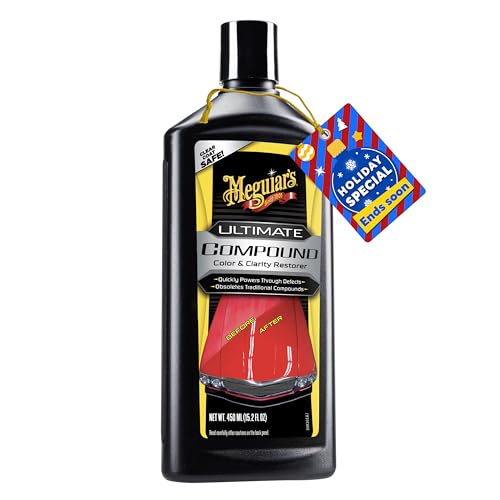
Meguiar's Ultimate Compound Car Scratch Remover
Meguiar's Ultimate Compound is a fast-acting car polish that effectively removes scratches, swirls, oxidation, and water spots. Designed to restore color and clarity, it delivers a showroom-quality, swirl-free finish while being safe on clear coats and all gloss paint surfaces. Perfect for DIY enthusiasts or professionals looking for a reliable paint correction solution.
Key Features:
- Removes scratches, swirls, and oxidation for a clear, smooth finish
- Restores color and clarity to provide a showroom shine
- Safe for clear coats and all gloss paints without causing hazing
- Can be applied by hand or with a polishing machine
- Uses micro-abrasive technology for effective scratch removal and shine restoration
Pros
- Quickly removes imperfections for a flawless finish
- Protects and enhances paint without damaging clear coats
- Easy to use by hand or with a machine
Cons
- May require multiple applications on deep scratches
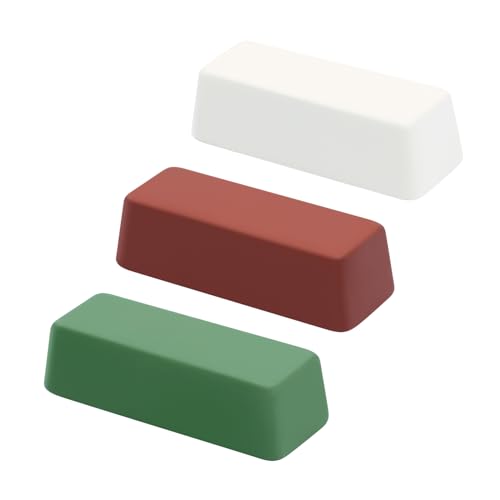
Mini Buffing Polishing Cutting Compounds Kit - Coarse, Medium, Fine
This mini buffing and polishing compound kit includes three color-coded bars designed to provide a smooth, mirror finish on various metal surfaces. Ideal for jewelry and metalworking, the kit features coarse, medium, and fine compounds to handle different stages of polishing with ease.
Key Features:
- Provides smooth, mirror-like finish on multiple surfaces
- Suitable for polishing metals such as stainless steel, iron, aluminum, brass, bronze, copper, silver, and gold
- Easy application by pressing compound against a spinning buffing wheel powered by a grinder, motor, or drill
- Color-coded bars: Red (coarse), White (medium), Green (fine)
- Compact size: 2-3/8" x 7/8" x 5/8", each bar weighs 35g
- Made from aluminum oxide
- Includes a set of three polishing compounds
Pros
- Versatile for a wide range of metals
- Clear color-coded system for easy use
- Compact and lightweight for convenient handling
Cons
- Requires a compatible buffing wheel and power tool for effective use
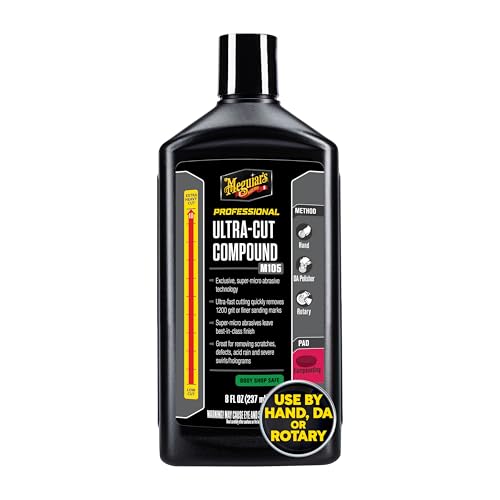
Meguiar's M105 Ultra-Cut Compound for Scratch and Swirl Removal
Meguiar's M105 Ultra-Cut Compound is a professional-grade car polishing product designed to remove moderate to heavy paint defects such as scratches, swirls, and oxidation. It restores the paint's clarity and gloss while being safe on all clear coat finishes. Suitable for hand application or machine polishing, it delivers fast cutting action with a smooth, high-gloss finish.
Key Features:
- Removes moderate to heavy paint defects including scratches, oxidation, swirls, acid rain damage, and sanding marks up to 1200 grit
- Fast-cutting formula with micro-abrasives that reduce additional swirling while enhancing gloss and shine
- Leaves a high-gloss finish using advanced micro-abrasive technology
- Safe for all glossy finishes, including clear coats, without damaging paint
- Can be applied by hand, dual action polisher, or rotary buffer for versatile use
Pros
- Effectively removes heavy scratches and defects
- Enhances paint gloss and clarity
- Safe on clear coat finishes
Cons
- Requires some polishing experience to achieve best results
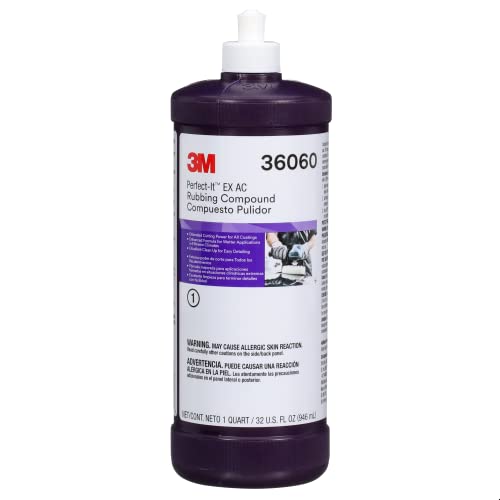
Perfect-It EX AC Fast Cutting Rubbing Compound - 1 Quart
This fast-cutting rubbing compound efficiently removes fine scratches and blemishes on automotive paint, especially for newer clearcoats. It prevents sticking and residue buildup, reducing dust for a smooth, refined finish. Ideal for professional use on various paint surfaces.
Key Features:
- Effectively removes scratches of P1200 grit or finer
- Formulated to prevent sticking and residue buildup
- Designed for newer, more delicate clearcoats
- Minimizes dust and delivers a smooth finish on multiple paint types
- Intended for industrial or professional use only
Pros
- Quick and efficient cutting power
- Reduces dust for cleaner application
- Prevents residue that can affect final finish
Cons
- Not suitable for consumer use
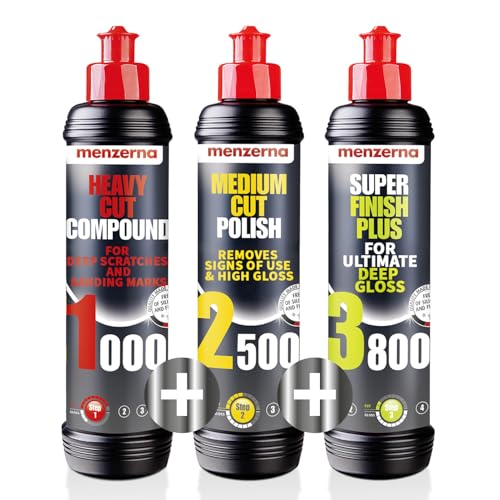
Menzerna 3-Step Polishing System for Scratch Removal and Glossy Finish
This Menzerna polishing set offers a complete 3-step solution to restore and enhance your vehicle's paintwork. It effectively removes scratches and swirls while delivering a deep, mirror-like shine ideal for both enthusiasts and professional detailers.
Key Features:
- Three-step system including Heavy Cut Compound 1000, Medium Cut Compound 2500, and Super Finish 3800
- Step 1 removes light scratches, swirls, and surface imperfections
- Step 2 eliminates holograms and polishing marks for smoothness
- Step 3 enhances gloss with a deep, radiant mirror-like finish
- Delivers professional-grade results for showroom-quality paint restoration
Pros
- Comprehensive 3-step system covers all polishing needs
- Produces a high-gloss, mirror-like finish
- Suitable for both beginners and professionals
Cons
- Requires multiple steps, which may be time-consuming for some users
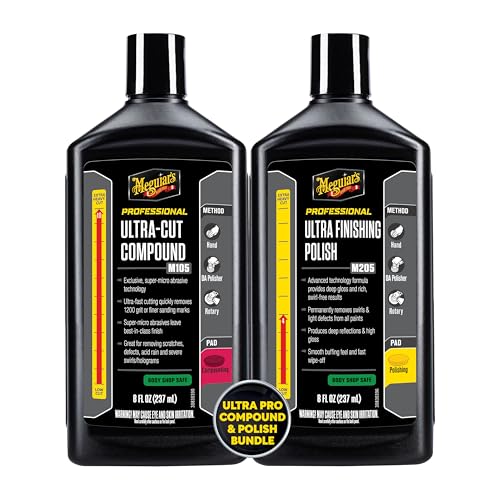
Meguiar's M105 Compound and M205 Polish Kit
This kit combines Meguiar's M105 Ultra-Cut Compound and M205 Ultra Finishing Polish to effectively remove paint defects and enhance your vehicle's shine. Ideal for tackling scratches, oxidation, and swirl marks, it leaves a deep, swirl-free gloss suitable for all clear coat finishes.
Key Features:
- Removes moderate to heavy paint defects including scratches, oxidation, swirls, acid rain damage, and sanding marks up to 1200 grit
- Ultra-fast cutting action eliminates sanding marks while minimizing swirl marks
- M205 Polish permanently removes light swirls and holograms, refining paint with high gloss and clarity
- Safe for all glossy and clear coat finishes without causing damage
- Can be applied by hand, dual action polisher, or rotary buffer for versatile use
Pros
- Effectively removes a wide range of paint defects
- Enhances gloss with a swirl-free finish
- Versatile application methods for different polishing techniques
Cons
- Requires careful application to avoid overlapping polish hazing
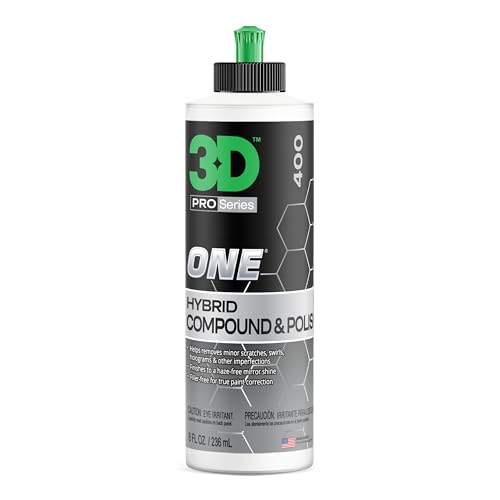
3D One Hybrid Scratch & Swirl Remover and Polish
3D One is an advanced hybrid compound designed to restore and enhance your vehicle's paint with a single application. It effectively removes scratches, swirls, and oxidation while delivering a deep, mirror-like finish. Suitable for both hand and machine use, this product offers professional-grade paint correction and long-lasting shine for any car, from daily drivers to show vehicles.
Key Features:
- Hybrid formula combining cutting compound and finishing polish for one-step paint correction
- Removes swirls, scratches, and oxidation to restore faded or dull paint
- Zero-dust formula ensures a clean, flawless finish on all paint colors
- Works effectively by hand or with a dual-action polisher on full panels or spot corrections
- Formulated with over 25 years of car care expertise and made in the USA
- Simplifies detailing by replacing multi-step correction processes with one product
Pros
- One-step solution saves time and effort
- Delivers professional-level paint correction and shine
- Versatile for hand or machine application
Cons
- May require multiple applications for severe paint damage
What's the Big Deal About Buffing Compounds?
You know that perfectly glossy car finish you see at shows and in magazines? Yeah, that smooth, mirror-like shine doesn't just happen by magic. It's all about the buffing compound. This unsung hero in the detailing world works wonders by smoothing out those annoying surface imperfections like scratches, oxidation, and swirl marks. Honestly, it's like giving your ride a facelift without the fuss, or the cost.
Breaking It Down: What Exactly Is a Buffing Compound?
Let's not get too technical, but here's the gist: a buffing compound is a mildly abrasive paste or liquid formulated to polish surfaces. It's designed to cut through the top layer just enough to level out irregularities, making your paint or metal look brand new again. Imagine sanding rough wood but way gentler, and more precise. The goal is always to refine the surface rather than damage it.
Reviews you may find interesting:
7 Best Car Code Readers (2026 Review Guide)8 Best Car Air Fresheners (2026 Review Guide)
8 Best Scan Tools With ECU Programming (2026 Review Guide)
Your Guide to Picking the Right One (Because Not All Are Created Equal)
You should know that there's a whole spectrum of buffing compounds out there, each tailored for different needs. You might be tempted just to grab whatever's on sale, but that's a gamble you want to avoid. Picking the wrong compound is like choosing the wrong utensil for a recipe: sure, you could chop veggies with a spoon, but it won't be enjoyable or effective.
- Coarse compounds: These beasts handle deep scratches and heavy oxidation. They're aggressive and cut fast but need caution to avoid extra swirl marks.
- Medium compounds: Versatile and user-friendly, they smooth out moderate defects to an intermediate shine.
- Fine or finishing compounds: The gentle polishers that bring out that flawless, glossy finish after the heavy lifting's done.
So, what's your surface like? Is it rough around the edges or mostly just dull? That'll help you decide which compound fits the bill.
Getting It Right: Tips and Tricks for Buffing Like a Pro
Admittedly, buffing might seem intimidating, especially when the thought of messing up your precious paint pops into your head. But relax, it's not rocket science. Here's a handful of no-nonsense pointers:
- Start small and test: If you're new or working on a new surface, always test a small hidden section. It saves headaches later.
- Use the right pad and tool: Foam pads, wool pads, dual-action or rotary buffers, they each matter. Matching them to your compound type is key.
- Don't overdo it: Less is more. Applying too much pressure or compound can generate heat and damage your paint.
- Work in sections: Breaking your work into manageable chunks improves results and keeps fatigue at bay.
- Keep it moving: Don't let the pad sit in one spot; constant movement avoids burn marks.
Honestly, patience here pays off big time. Taking your time feels slow but saves you from costly fixes down the road.
Wait, Aren't All Buffing Compounds the Same?
Not quite. Some folks assume all compounds just do the same thing, but it's really about formulation and particle size. You might find compounds specifically designed for automotive paint, metal, plastic, or even wood. Each has unique abrasives tailored for optimal performance on its intended surface.
You might wonder: "Can I just use a car compound on chrome?" Maybe, but it won't be as effective or safe as a metal-specific product. Here's where reading labels, or even better, knowing what you're doing, makes a difference.
Extra Nuggets: What Happens After Buffing?
Here's a little nugget that often flies under the radar. Buffing compounds don't just polish, they can leave micro-scratches or residue behind. So, following up with a quality polish and then a protective wax or sealant is not just recommended; it's essential.
Think of it like cleaning your glasses. Buffing compounds are the wipes that remove grime and scratches, but a polish is the final buff for crystal clarity, and a protective coat is your anti-fog shield. Skipping those steps means your shine won't last as long.
Wrapping It Up: Ready to Shine?
So, the next time you see your car or project looking a bit lackluster, remember buffing compounds are your secret weapon. They demand some finesse and a bit of know-how, but when it all comes together, the results are genuinely rewarding. Nothing beats that gleam you get when the light hits just right, revealing a surface so smooth it practically glows.
By the way, Taking the time to understand these compounds and how to use them properly might just turn a tedious chore into a satisfying ritual. After all, a job done well leaves you grinning every time you catch a glimpse of that shine, and that's worth every minute.