8 Best Oil Stop Leak (2026 Review Guide)
The Best Ranked Oil Stop Leak
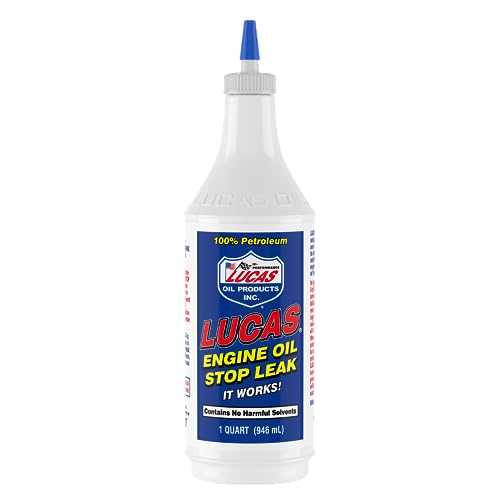
Lucas Oil Engine Oil Stop Leak - 1 Quart
Lucas Oil Engine Oil Stop Leak is designed to reduce oil leaks and restore the performance of your engine seals. This formula is suitable for all types of motor oils and helps extend the life of your engine by preventing oil loss and minimizing leaks.
Key Features:
- Compatible with all types of motor oils
- Helps stop and prevent oil leaks
- Protects and rejuvenates engine seals
- Made in the USA
Pros
- Effectively reduces engine oil leaks
- Safe for use with any motor oil
- Extends engine seal life
Cons
- May not work on severe or old seal damage
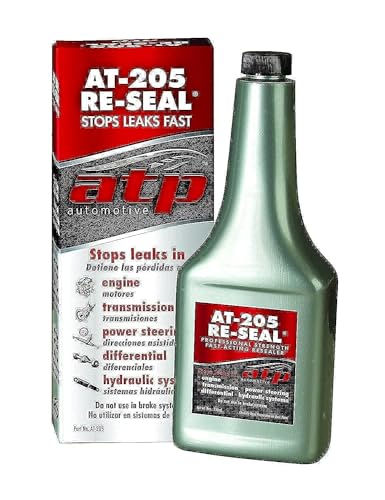
ATP Automotive Re-Seal Leak Stopper, 8 oz
This fast-acting re-sealer rejuvenates rubber seals and gaskets across various automotive systems, effectively stopping leaks and extending component life. Compatible with a wide range of oils and fluids, it provides a reliable solution without damaging seals.
Key Features:
- Professional strength formula that stops leaks quickly
- Restores rubber seals and gaskets in engines, transmissions, power steering, differentials, and hydraulic systems
- Works with conventional and synthetic oils, ATF, gear oil, power steering fluid, and hydraulic oil
- Free of petroleum distillates to prevent over-swelling or damage to seals
- 8 oz bottle treats up to 6 quarts of fluid, with dosage adjusted as needed
Pros
- Fast and effective leak stopping
- Safe for various automotive fluids and systems
- Helps extend seal and gasket lifespan
Cons
- Requires correct dosage adjustment based on fluid capacity
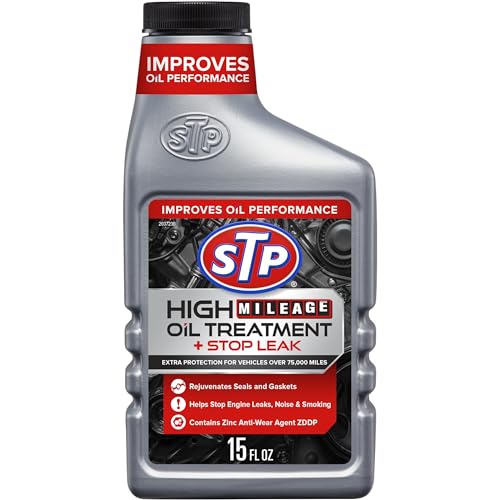
STP High Mileage Oil Treatment with Leak Stopper
STP High Mileage Oil Treatment is specially designed for vehicles with over 75,000 miles. It protects your engine by reducing metal-to-metal friction, rejuvenating seals, and preventing leaks, noise, and smoking. This high-viscosity additive enhances engine performance and is easy to use during every oil change, suitable for cars, light trucks, and SUVs.
Key Features:
- Designed for vehicles with over 75,000 miles
- Contains ZDDP additive to prevent engine wear
- High-viscosity formula reduces friction between engine parts
- Stops leaks and rejuvenates seals and gaskets
- Suitable for use in cars, light trucks, and SUVs
- Use with every oil change
Pros
- Reduces engine wear and extends engine life
- Helps stop leaks and reduce engine noise
- Easy to add during regular oil changes
Cons
- Effectiveness may vary depending on engine condition
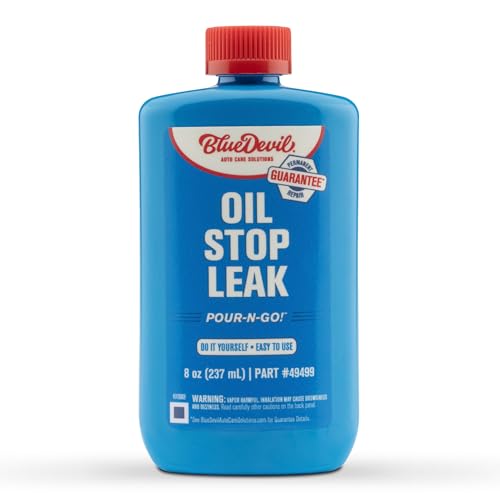
BlueDevil Engine Oil Stop Leak - 8 oz
BlueDevil Engine Oil Stop Leak is a reliable additive designed to permanently seal oil leaks in various engine types. Easy to apply and safe for all gasoline and diesel engines, it restores rubber seals and prevents leaks without damaging your engine.
Key Features:
- Simple application: pour the recommended amount into the engine oil system or crankcase
- Permanently seals oil leaks, stopping seepage and drips even after extensive driving
- Compatible with all gasoline and diesel engines
- Repairs and restores rubber seals in oil systems, including pinion seals, gear cases, shock absorbers, gearboxes, axle seals, and gear differentials
- Formulated with a non-clogging, petroleum-free formula that doesn't swell seals or harm your engine
Pros
- Easy to use with straightforward application
- Works permanently to stop oil leaks
- Safe for use on a wide range of engine types and components
Cons
- May not work on extremely large or severe leaks
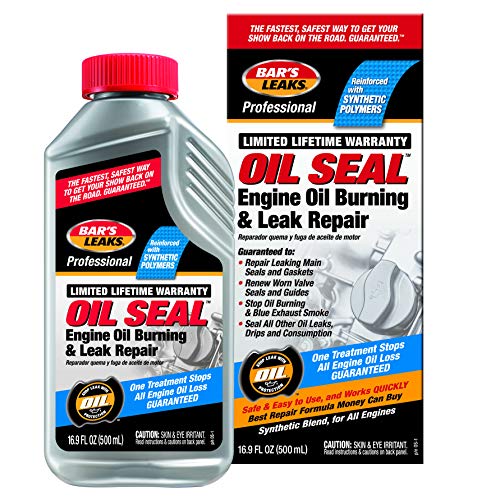
Bar's Leaks Oil Seal Engine Oil Leak and Burning Repair
Bar's Leaks Oil Seal is designed to stop oil leaks and reduce oil burning in gasoline and diesel engines. It restores worn valve seals and guides, helping to prevent blue exhaust smoke and excessive oil consumption. Suitable for a wide range of vehicles and motor applications, this product is an effective solution to maintain engine performance and prevent costly repairs.
Key Features:
- Repairs leaking main seals and gaskets in gasoline and diesel engines, including turbocharged and hybrid models
- Restores worn valve seals and guides to reduce oil consumption
- Stops oil burning and blue exhaust smoke in engines with 3 to 10 cylinders
- Seals oil leaks and drips in cars, trucks, SUVs, boats, tractors, motorcycles, ATVs, and lawn equipment
- Made in the USA
Pros
- Effective for a wide range of gasoline and diesel engines
- Helps reduce oil consumption and blue smoke emissions
- Versatile for various motor applications beyond just cars
Cons
- May not be effective if the vehicle consumes more than one quart of oil per day
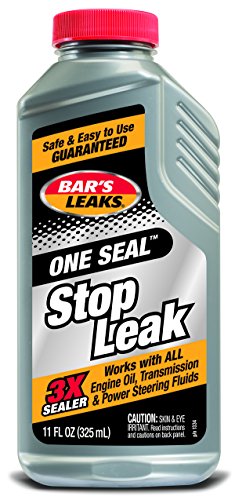
Bar's Leaks One Seal Stop Leak - 11 oz
Bar's Leaks One Seal Stop Leak is a multipurpose formula designed to seal minor leaks in engine oil, transmission fluid, and power steering systems. Easy to use and safe, a single bottle treats one leak, helping to restore the integrity of worn seals and gaskets.
Key Features:
- Compatible with engine oil, transmission fluid, and power steering fluid
- Effectively seals minor leaks in seals and gaskets caused by normal wear
- Safe to use and treats one leak per bottle
Pros
- Multi-system compatibility reduces need for multiple products
- Simple and safe application
- Helps extend the life of seals and gaskets
Cons
- Only effective on minor leaks, not suitable for major damage
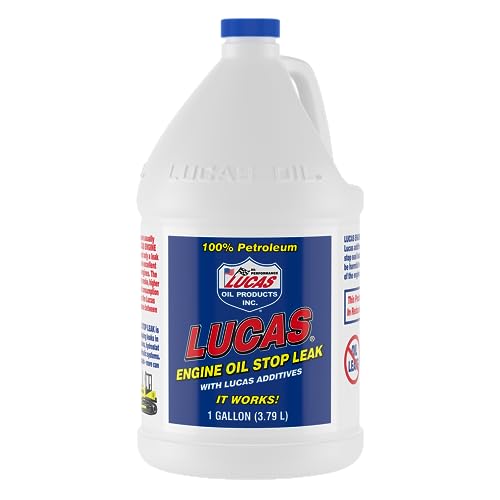
Lucas Oil Engine Oil Stop Leak - 1 Gallon
Lucas Oil Engine Oil Stop Leak helps restore worn engine seals, reduces oil consumption and engine noise, and increases oil pressure without causing damage or corrosion.
Key Features:
- Works with petroleum, semi-synthetic, and full synthetic motor oils
- Free from harmful solvents
- Reduces engine noise and oil consumption while improving oil pressure
- Restores worn seals safely without causing damage or corrosion
Pros
- Compatible with various types of motor oils
- Safe for engine seals with no harmful solvents
- Effectively reduces engine noise and oil leaks
Cons
- May take some time to see noticeable results
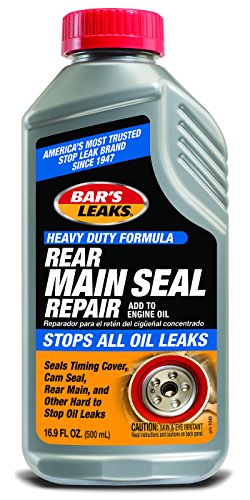
Rear Main Seal Repair Additive - 16.9 oz
This rear main seal repair additive is designed to stop oil leaks in your engine by sealing leaks in the rear main seal, timing cover, cam seal, and other challenging areas. Simply add it to your engine oil to reduce or eliminate leaks, providing an effective solution without the need for immediate repairs.
Key Features:
- Seals leaks in rear main seal, timing cover, cam seal, and other hard-to-stop oil leaks
- Add directly to engine oil for easy application
- Formulated to stop rear main seal leaks and works better than conventional stop-leak products
- Add full bottle to engine crankcase at or between oil changes; avoid overfilling
- Most leaks stop within 100 miles or 2 days of driving
Pros
- Simple and convenient to use
- Effective on various oil leak points
- Works within a short driving period
Cons
- May not permanently fix severe leaks requiring mechanical repair
Why Worry About Oil Leaks Anyway?
So, you've noticed that oily puddle under your car again, great. It's one of those things that's easy to ignore until, bam, you're faced with a dry engine or worse. Oil leaks might start small, barely a drip, but over time they can steal enough oil to leave your engine gasping. And you know what? Sometimes the root cause isn't some catastrophic failure, but just old seals and gaskets taking their toll with age. That's where those nifty little oil stop leak products come into play.
What's the Deal With Oil Stop Leak Products?
At their core, oil stop leak additives are like tiny emergency repair kits inside your engine oil. They don't offer miracles like a brand-new gasket, but they're designed to swell and soften seals, think of it as giving tired rubber parts a much-needed spa day. This swelling effect can close up hairline cracks or leaks around seals, curbing that annoying dribble of oil that can lead to bigger problems.
Reviews you may find interesting:
7 Best Car Headlight Polishers (2026 Review Guide)7 Best Trailer Hitch Locks (2026 Review Guide)
9 Best Carburetor Cleaners (2026 Review Guide)
But here's the catch, these products don't fix everything. They're tailored mostly for minor leaks, those little nuisances caused by wear and tear rather than major mechanical failures. If you're dealing with a blown head gasket or a cracked engine block, you'll want to avoid strapping on duct tape and call in a pro instead.
Why Should You Even Bother?
Honestly, if you're the kind of person who checks oil levels regularly and catches leaks early, you might be able to save yourself serious cash and hassle with a stop leak additive. It's sort of like putting a bucket under a leaky roof before a rainstorm, buying time, if you will. And hey, sometimes it's just about prolonging that weekend before you can get your car to the shop.
How Do These Additives Actually Work?
Let me break it down: the little molecules in these stop leak formulas interact with the rubber components inside your engine, the seals, gaskets, O-rings, and so forth. Over time, heat and exposure cause these parts to dry out, shrink, and crack, creating tiny escape routes for oil. When you add the stop leak product, it soaks into the rubber, expanding and reconditioning it. This helps seal up leaks or at least slows them way down, giving those old parts a new lease on life, even if temporary.
A Little Heads-Up About Compatibility
not all stop leak additives play nicely with every engine or oil type. Some might gel up or not mix well with certain synthetic oils, while others might mask symptoms rather than solve them. So, always check the product label or your vehicle's manual to make sure there won't be any surprises down the line.
When and How Should You Use an Oil Stop Leak?
Here's the lowdown: the best time to pour in an oil stop leak is during an oil change or when your engine is warm. Warm oil circulates better and ensures the additives reach all those tricky spots. You don't want to just toss it in cold and hope for the best, think of it like watering a plant versus throwing water on the ground.
Also, be patient. These additives don't fix leaks overnight. Give it some time, maybe a few hundred miles, to see the magic happen, or at least some relief. If you don't see improvement, it's probably time to reconsider and seek a professional diagnosis.
What Else Should You Keep in Mind?
- Don't overload the engine: Adding more than recommended won't speed up results; it might even cause harm.
- Regular maintenance is still king: These additives aren't a replacement for proper care and timely repairs.
- Watch for signs of worsening leaks: Sudden drops in oil pressure or excessive smoke are red flags needing immediate attention.
More Than Just A Quick Fix
You might think of oil stop leak products as those little life rafts floating in a sea of engine troubles, clever, handy, and sometimes the difference between a pricey repair and continued smooth driving. But keep in mind, they don't replace the value of a skilled mechanic's touch. Using these additives is a bit like putting on a comfortable pair of shoes to manage the journey before you get a tailor-made fix.
Final Thoughts, Is It Worth a Try?
Considering how easy these products are to use and the potential savings, it's a no-brainer to give them a shot if you're dealing with a minor leak. Who wouldn't want to delay a costly repair just a little longer? However, don't ignore persistent leaks or hope that an additive will fix all woes. Pay attention, monitor oil levels, and when the time's right, get under the hood professionally.
So next time you see a little oil pooling under your ride or feel it's burning a bit more oil than usual, remember: a good oil stop leak might just be your car's temporary best friend.