6 Best Laptop OBD-II Scanners (2026 Review Guide)
The Best Ranked Laptop OBD-II Scanner
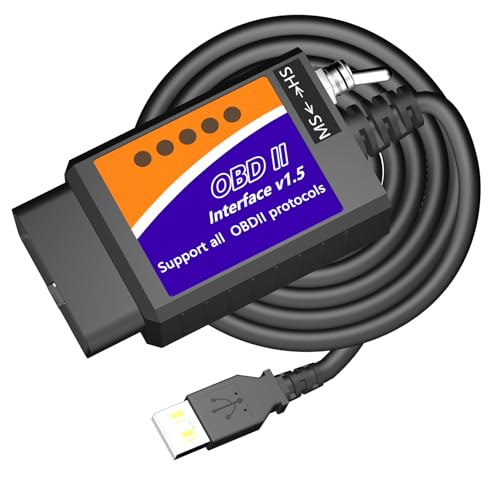
OBD2 to USB Diagnostic Cable for Car Performance and Customization
This OBD2 to USB cable allows you to easily read and clear engine trouble codes, monitor real-time sensor data, and customize vehicle settings, especially for Ford and Mazda models. Compatible with most 12V cars and SUVs made after 1996, it supports a variety of diagnostic software for Windows laptops. Ideal for DIY car maintenance and personalized vehicle programming.
Key Features:
- Read and clear diagnostic trouble codes (DTC) to identify and fix engine issues.
- Monitor live sensor data including freeze frame, smog, EVAP, and O2 tests to assess vehicle performance.
- Customize Ford and Mazda vehicle functions such as tire size calibration, trailer brake controller, mirror folding, ambient lighting, remote start, and audio settings.
- Compatible with 12V vehicles from various brands including GM, Toyota, Ford, Chevy, Honda, Nissan, Hyundai, KIA, Subaru, GMC, Jeep, Ram, Volkswagen, Benz, BMW, Lexus, Audi, Buick, and Cadillac.
- Supports multiple OBD software options; Ford-related vehicles can use FORScan and other specialized tools, while other brands support general OBD diagnostic apps.
- Easy setup: install the driver and software, connect the cable to the vehicle, and start diagnosing or customizing your car.
Pros
- Wide vehicle compatibility for diagnostics on most 12V cars made after 1996.
- Advanced customization options specifically for Ford, Lincoln, Mercury, and Mazda models.
- Supports various popular OBD software for flexible use and professional-level diagnostics.
Cons
- Programming features are limited to Ford, Lincoln, Mercury, and Mazda vehicles only.
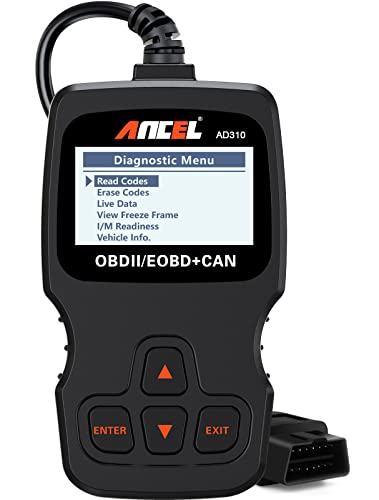
ANCEL AD310 Universal OBD II Scanner for Engine Code Reading and Clearing
The ANCEL AD310 is a reliable and compact OBD II scanner designed to quickly diagnose and clear check engine light codes for most 1996 or newer vehicles. It offers fast, accurate readings of emission-related problems and provides live data, freeze frame, and vehicle information to help users identify and fix engine issues efficiently. Lightweight and easy to operate, it's a handy tool for both DIYers and mechanics.
Key Features:
- Diagnoses and clears emission-related engine codes quickly and accurately.
- Supports all OBDII protocols including KWP2000, J1850 VPW, ISO9141, J1850 PWM, and CAN.
- Displays live sensor data, freeze frame, I/M monitor readiness, and stores vehicle info.
- Compact and durable design with a 2.5-foot flexible cable for easy use and transport.
- Plug-and-play operation powered directly from your vehicle's OBDII port, no batteries needed.
- Compatible with 1996 and newer US, 2000 and newer EU, and various Asian vehicles with OBDII interface.
Pros
- Accurate and fast diagnostics for emission system faults.
- Compact, lightweight, and easy to carry.
- No batteries or charging required.
Cons
- Only diagnoses emission-related codes; cannot read other engine faults.
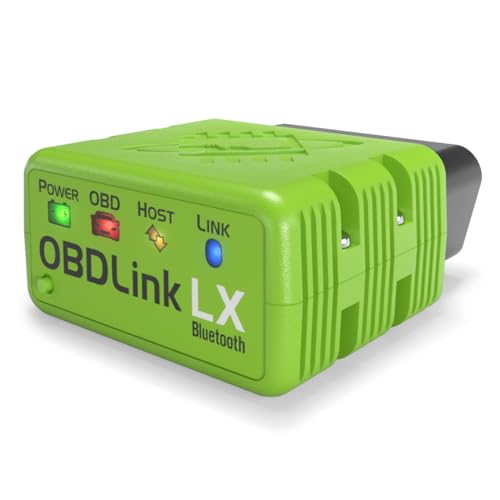
OBDLink LX Bluetooth 3.0 OBD2 Diagnostic Scanner
The OBDLink LX is a fast and reliable Bluetooth OBD2 scanner designed for Android devices and Windows PCs. It offers broad vehicle compatibility, easy wireless connection, and supports popular diagnostic apps, making it an excellent tool for car and compatible motorcycle diagnostics.
Key Features:
- High-speed scan tool for quick and accurate vehicle diagnostics on Windows PCs and Android phones
- Bluetooth wireless connection with secure, hacker-proof communication and minimal battery drain
- Includes OBDLink app for Android and OBDwiz software for Windows, compatible with third-party apps like Torque and DashCommand
- Supports all 1996 and newer cars and light trucks sold in the U.S., except hybrid and electric vehicles
- Compatible with MotoScan for motorcycle diagnostics
Pros
- Fast and accurate diagnostic scans
- Wide vehicle compatibility
- Secure and easy wireless connectivity
Cons
- Not compatible with Apple iOS devices
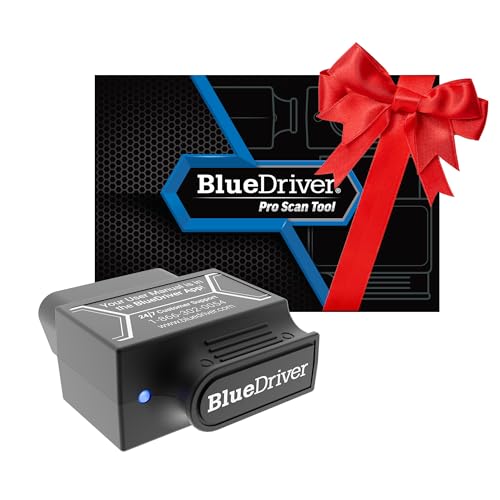
BlueDriver Bluetooth OBD2 Scan Tool for iPhone & Android
The BlueDriver Bluetooth OBD2 Scan Tool offers professional-grade vehicle diagnostics right on your smartphone. Compatible with gas-powered vehicles from 1996 onwards, it helps you read and clear engine, ABS, airbag, and other trouble codes with ease. Featuring wireless connectivity, detailed repair reports, live data monitoring, and access to repair videos, it's a comprehensive tool for car owners who want reliable diagnostics without subscription fees.
Key Features:
- Professional OBD2 scanner that reads and clears trouble codes like a mechanic.
- Access advanced diagnostics for engine, ABS, airbag, SRS, TPMS, and more.
- Provides repair reports with possible causes and suggested fixes.
- Live data monitoring for real-time vehicle health updates.
- Wireless Bluetooth connection to your car's OBDII port via smartphone or tablet.
- User-friendly iOS and Android app with a large database of repair videos.
- No subscription fees or additional charges after purchase.
- Compatible with all gas-powered vehicles from 1996 and newer.
- 24/7 professional support via phone and in-app chat.
Pros
- Easy wireless connection and user-friendly app.
- Comprehensive diagnostics including ABS, airbag, and TPMS codes.
- No subscription fees or hidden costs.
Cons
- Only compatible with gas-powered vehicles, excluding diesel engines.
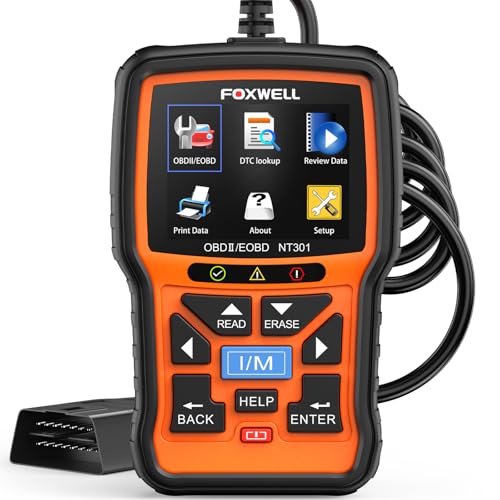
FOXWELL NT301 OBD2 Code Reader for Check Engine Light
The FOXWELL NT301 is a reliable OBD2 scanner that helps you diagnose and clear engine fault codes with ease. It accurately reads live data, checks emission readiness, and resets the check engine light, making it a practical tool for both home users and mechanics. Compatible with most 1996 and newer vehicles, this plug-and-play device is powered directly from your car and requires no battery or initial updates.
Key Features:
- Reads and clears diagnostic trouble codes (DTCs) and turns off check engine light after repairs
- Accesses emission readiness status and retrieves vehicle identification number (VIN)
- Displays live sensor data with graphing to detect issues and monitor trends
- Includes quick hotkeys for reading, erasing codes, and checking emission readiness
- Supports multiple OBDII protocols including KWP2000, J1850 VPW, ISO9141, J1850 PWM, and CAN
- Compatible with 1996 and newer US, 2000 and newer EU and Asian cars, SUVs, and light trucks
- Powered through vehicle's OBD2 port, no batteries needed and no update required before use
- Features a 2.8-inch color display and offers free lifetime software updates
- Recommended by professional mechanics and compatible with code analysis tools and printers
- 1-year seller warranty with dedicated tech support
Pros
- Easy to use plug-and-play design with no battery or prior updates needed
- Accurate reading and clearing of engine codes and emission readiness
- Live data graphing helps pinpoint issues efficiently
- Wide vehicle compatibility covering most OBD2 vehicles
- Free lifetime software updates keep the tool current
Cons
- Does not support advanced system diagnostics such as ABS, TPMS, or battery registration
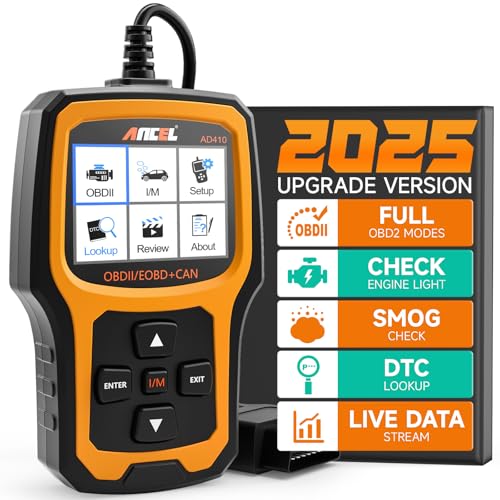
ANCEL AD410 OBD2 Scanner for Engine Diagnostics
The ANCEL AD410 OBD2 scanner is a reliable tool designed to quickly read and clear engine fault codes on most OBD2-compliant vehicles. Featuring a clear color display and easy-to-use interface, it supports advanced diagnostics like O2 sensor and EVAP system testing to help you maintain your vehicle's performance and reduce emissions. Ideal for both beginners and experienced mechanics, this device is powered directly from your car and comes with multilingual support.
Key Features:
- Compatible with all 16-pin OBD2 vehicles including US (1996+), European (2000+), and Asian models, supporting protocols like CAN, KWP2000, ISO9141, and J1850.
- Reads and clears stored and pending emissions-related fault codes with over 42,000 built-in DTC definitions for easy troubleshooting.
- Performs advanced diagnostics such as O2 sensor and EVAP system tests to improve fuel efficiency and check for leaks.
- 2.4-inch color TFT display with an intuitive user interface that provides easy navigation without a manual.
- Powered directly from the vehicle's OBD2 port; no batteries or chargers required; USB cable included for updates (Windows only).
- Supports multiple languages including English, German, French, and Spanish.
Pros
- Wide compatibility with most OBD2 vehicles internationally.
- Large built-in database of fault codes eliminates the need for external references.
- User-friendly color display and interface suitable for all experience levels.
Cons
- Does not support non-engine systems such as ABS, SRS, or transmission diagnostics.
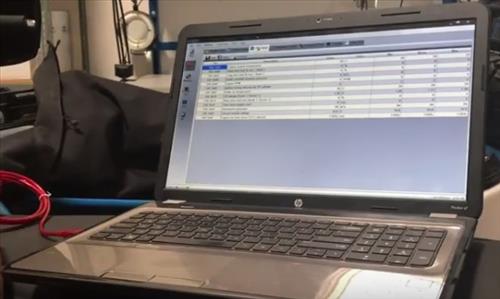
Why Bother with a Laptop OBD-II Scanner?
Ever been stuck wondering what that mysterious check engine light really means? While it could be a simple sensor hiccup or something far more serious. That's where a laptop OBD-II scanner comes in clutch. Not just for the pros, these tools let anyone peek under the hood digitally, using their trusty laptop as a diagnostic dashboard.
You know what's neat? Unlike those handheld devices, a laptop setup gives you room to see detailed charts, live sensor feeds, and even run some tests that handhelds can only dream of. So, if you like getting a little geeky with your car's health or yearning to save some bucks on mechanic visits, this might just be your new best friend.
The Heart of It: How Does a Laptop OBD-II Scanner Actually Work?
Think of your car as a complex orchestra of sensors and computers, all playing their part. The OBD-II port is like the conductor's baton, letting you tap into the symphony. When you plug an OBD-II interface into your laptop, usually via USB or Bluetooth, you gain access to the vehicle's diagnostic data through specialized software.
Reviews you may find interesting:
7 Best Breathalyzers (2026 Review Guide)7 Best Truck Tents (2026 Review Guide)
8 Best Car Phone Mounts (2026 Review Guide)
This connection lets you read error codes, see real-time data such as engine RPM, coolant temperature, and even emissions info. It's like having a stethoscope for your car's electronic nervous system.
Key Features You Should Look Out For
But hey, not all laptop OBD-II scanners are created equal. When you're browsing options, keep your eyes peeled for these essentials:
- Compatibility: Make sure the scanner supports your vehicle's make, model, and protocol. Some tools might play nice with most cars, but it's always good to double-check.
- Connectivity: USB cables, Bluetooth, or Wi-Fi? USB is reliable but less flexible; Bluetooth offers wireless convenience but can sometimes throw a spiderweb of connectivity issues if not solid.
- Software Quality: The software is your window into the engine's soul. Look for intuitive interfaces, clear code definitions, and regular updates for the best experience.
- Advanced Diagnostics: Beyond reading codes, can it reset check engine lights? Perform component tests? Access manufacturer-specific codes? These features add serious value.
- Ease of Use: Because if it feels like you need an engineering degree to figure it out, it might just sit on your shelf gathering dust.
Why a Laptop Over a Handheld Device?
You might wonder, "Why lug a laptop to the garage when a handheld reader is so much simpler?" Good question. Honestly, a laptop is a bit bulkier and sometimes overkill for quick scans. But if you want more than just a generic error code, a laptop paired with the right software gets you a deep dive into your car's heartbeat.
Plus, bigger screens mean easier reading, and some software packages offer graphs and historical logs to help you spot patterns over time. For anyone serious about DIY maintenance or those who love tinkering, having this level of insight can feel empowering.
Getting Your Setup Ready: Tips to Make It Work Smoothly
Once you have your OBD-II adapter and laptop, setting up can be surprisingly straightforward, if you know what to watch out for. Here are a few tips:
- Check Software Compatibility: Ensure your chosen diagnostic program matches your operating system and the adapter's communication method.
- Keep Drivers Updated: Sometimes your laptop needs specific drivers to talk to the adapter, so don't skip those updates!
- Test Connections: Before relying on the tool during an emergency, try it out in your driveway or garage to confirm it reads data correctly.
- Secure the Setup: A loose connection can lead to data hiccups, make sure cables or Bluetooth links are stable.
- Stay Organized: Create folders for saved logs, screenshots, or reports. You'd be surprised how quickly these files can pile up.
When Things Get Tricky: Common Mistakes to Avoid
Being tech-savvy doesn't mean you're immune to some pitfalls. Here's the lowdown on what's easy to overlook:
- Ignoring Manufacturer-Specific Codes: Generic scanners might miss or misinterpret some codes. If your car's giving you messy data, it might mean you need more tailored software.
- Not Updating Software: Cars evolve, and so does the OBD-II protocol. Updates bring better compatibility and fix bugs, so don't skip them.
- Rushing Diagnostics: Sometimes, a trouble code triggers due to transient issues. Jumping to conclusions without further checks can cost unnecessary repairs.
- Forget the Battery: If your laptop isn't charged or the car's battery is weak, data transfer errors might crop up, keep both powered up during scans.
Wrapping It Up: Should You Go Laptop or Handheld?
So, where does that leave you? For casual users or road warriors wanting quick checks, handheld OBD-II scanners work just fine. But if you crave comprehensive diagnostics, love digging through data, or want a powerful tool for frequent use, pairing a good adapter with a laptop and the right software is hard to beat.
Remember, owning a laptop OBD-II scanner isn't just about fixing problems, it's about understanding your vehicle better, predicting issues before they snowball, and yep, saving some money and headache.
Honestly, once you get the hang of it, you might start seeing car diagnostics less like a chore and more like a fun challenge, a bit like deciphering your car's secret language. And who doesn't enjoy that kind of insider info?