9 Best ECU Coding OBD-II Scanners (2026 Review Guide)
The Best Ranked ECU Coding OBD-II Scanner
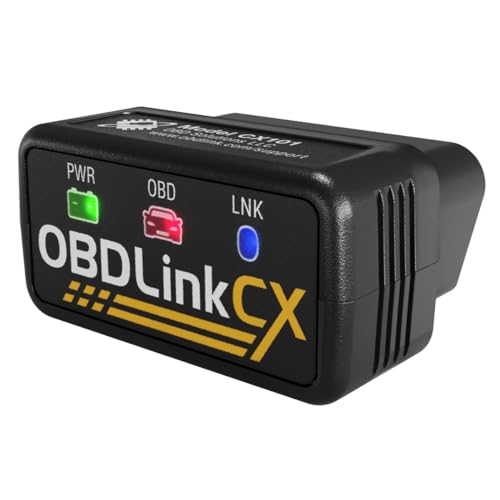
OBDLink CX Bluetooth 5.1 OBD2 Adapter for BMW and Mini
The OBDLink CX Bluetooth 5.1 adapter is designed specifically for BMW and Mini vehicles, providing seamless connectivity with iOS and Android devices. It offers full compatibility with the BimmerCode app for advanced car coding and diagnostics, ensuring reliable performance with advanced protection features to keep your vehicle safe.
Key Features:
- Designed for use with the BimmerCode app (app sold separately).
- Supports all BMW and Mini vehicles and protocols compatible with BimmerCode.
- Easy pairing with iOS and Android devices via Bluetooth 5.1.
- Advanced sleep mode and overvoltage protection allow safe, continuous connection.
- Stable connection prevents data loss and avoids ECU malfunction.
- Includes the OBDLink app for live data monitoring, diagnostics, and clearing check-engine lights.
Pros
- Full compatibility with BMW and Mini models.
- Reliable Bluetooth 5.1 connection with secure data transfer.
- Protects vehicle's ECU with sleep mode and overvoltage safeguards.
Cons
- Requires separate purchase of the BimmerCode app for coding features.
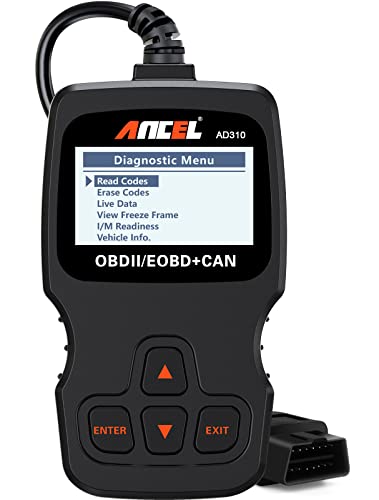
ANCEL AD310 Universal OBD2 Engine Code Reader
The ANCEL AD310 is a reliable and easy-to-use OBD2 code reader that helps you quickly identify and clear engine trouble codes for 1996 or newer vehicles. Compact and durable, it supports all major OBDII protocols and provides fast, accurate diagnostics to help you maintain your car's performance without needing extensive mechanical knowledge.
Key Features:
- Detects check engine light issues and reads/clears emission system trouble codes
- Displays live data, freeze frame, readiness monitors, and stores vehicle information
- Durable design with a 2.5-foot flexible cable, compact size (8.9 x 6.9 x 1.4 inches), and lightweight (12 ounces)
- Plugs into vehicle's OBDII port, no batteries or charging required
- Supports all OBDII protocols including KWP2000, J1850 VPW, ISO9141, J1850 PWM, and CAN
- Compatible with 1996+ US vehicles, 2000+ EU and Asian cars, light trucks, SUVs, and newer OBD2 and CAN systems
- Portable and convenient for both home use and on-the-go diagnostics
Pros
- Accurate and fast reading of engine codes
- No batteries needed, powered directly from the vehicle
- Compact and sturdy design makes it easy to carry and handle
Cons
- Only diagnoses emission-related engine faults, not all engine issues
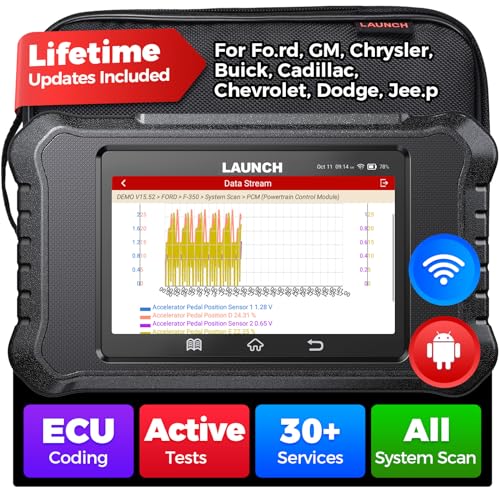
Launch X431 Creader Elite 2.0 Bi-Directional OBD2 Scanner
The Launch X431 Creader Elite 2.0 is a powerful bi-directional OBD2 scanner designed for Ford, GM, Chrysler, and related brands. It offers ECU coding, active testing, and access to all vehicle systems with over 100 special functions. Featuring fast performance with a 4-core processor and Android 8.1, plus lifetime free updates, this tool is ideal for professional mechanics and car enthusiasts needing comprehensive diagnostics.
Key Features:
- Supports ECU coding and active tests to modify car settings and diagnose issues quickly
- Covers all main on-board systems for Ford, GM, Chrysler, and related models from 1996 to 2026
- Includes more than 100 service functions such as oil reset, cylinder balance, DPF regeneration, and transmission relearn
- Compatible with diesel (12V), gasoline, hybrid vehicles, SUVs, light trucks, and minivans
- Equipped with a 4-core 1.3GHz processor, Android 8.1 OS, 2GB RAM, and 16GB storage
- Provides lifetime free software updates easily installed with one touch
- Supports advanced features like relay activation, injector/coils testing, and actuator controls
- Offers access to 11 built-in car software packages and expanded options via an in-app marketplace
Pros
- Extensive coverage for Ford, GM, Chrysler vehicles with all system diagnostics
- Includes rare ECU coding and active test functions at a reasonable price
- Lifetime free updates keep the tool current with new vehicles and functions
Cons
- Additional car brand software requires separate purchase through the app
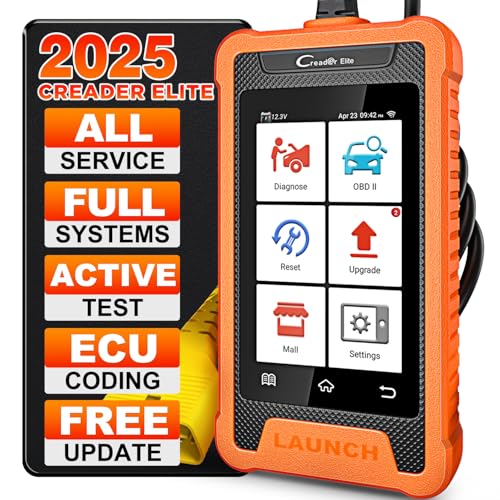
X431 Creader Elite OBDII Scanner for GM Vehicles
The X431 Creader Elite is a versatile diagnostic tool designed specifically for GM vehicles including Buick, Chevrolet, Cadillac, and GMC. It offers comprehensive system diagnostics, advanced bi-directional controls, and over 100 service reset functions to help both DIYers and professional mechanics maintain and customize vehicle performance easily.
Key Features:
- Free TPMS activation tool included for GM cars
- Complete diagnostics on all vehicle systems such as Engine, ABS, SRS, and Transmission
- Bi-directional controls to activate and test vehicle components like relays and solenoids
- ECU coding and adaptation for system recalibration and performance tuning
- Over 100 service reset functions including oil reset, TPMS, EPB, SAS, and DPF
- Full OBD2 functions with reading/clearing trouble codes and real-time sensor data display
- Automatic VIN detection for fast and accurate vehicle identification
- Lifetime free software updates for ongoing improvements and expanded vehicle coverage
Pros
- Comprehensive diagnostics covering multiple GM vehicle systems
- Advanced bi-directional testing and ECU customization capabilities
- Lifetime free updates ensure compatibility with new vehicle models
Cons
- Limited to GM vehicle brands, not suitable for other makes
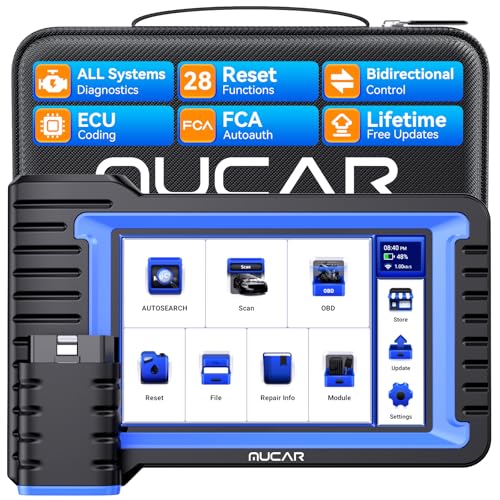
MUCAR Bidirectional OBD2 Scanner with ECU Coding and Active Test
The MUCAR Bidirectional OBD2 Scanner is a comprehensive diagnostic tool designed for full vehicle system analysis and advanced ECU coding. It supports over 94 car brands and offers more than 28 reset functions, enabling you to perform maintenance tasks and customize vehicle settings with ease. Equipped with wireless connectivity and an intuitive app, this scanner helps accurately pinpoint issues and boost vehicle performance.
Key Features:
- Wi-Fi enabled for easy app updates and downloading car brand diagnostic software, with built-in IM-Chat for technical support
- Supports online and offline ECU coding, including component matching, calibration, and activation of hidden vehicle features
- Bidirectional control to test subsystems and actuators like fuel injectors, coolant pumps, windows, and wipers for accurate fault diagnosis
- Over 28 maintenance reset functions such as throttle matching, injector coding, ABS bleeding, oil reset, gear learning, and more
- Compatible with OBD2 protocols including CAN, KWP2000, ISO9141, J1850 VPW, and PWM, covering 12V sedans, SUVs, light trucks, mini vans, and hybrids
Pros
- Comprehensive vehicle system coverage with advanced ECU coding capabilities
- Wide compatibility with over 94 car brands and multiple OBD2 protocols
- Convenient wireless operation and easy app updates with technical support
Cons
- Service functions may vary depending on vehicle compatibility
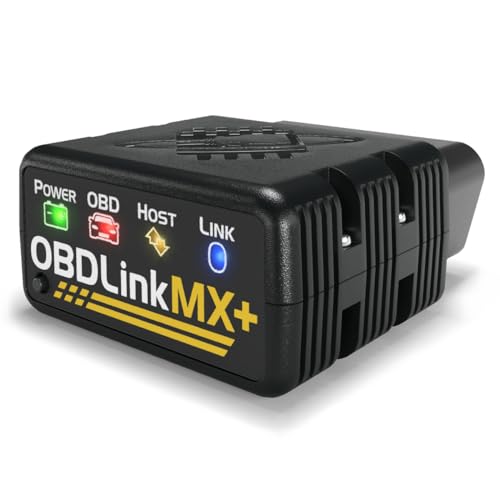
OBDLink MX+ Bluetooth OBD2 Scanner
The OBDLink MX+ is a versatile Bluetooth OBD2 scanner compatible with iPhone, Android, and Windows devices. It provides advanced diagnostics with extensive support for multiple vehicle brands and popular automotive apps, allowing you to monitor and clear trouble codes, and access numerous live vehicle parameters easily.
Key Features:
- Compatible with iPhone, Android, and Windows devices for professional-grade diagnostics
- Supports popular apps like FORScan, Torque, BimmerCode, Dashcommand, AlfaOBD, and Carista
- Enhanced support for Ford, GM, Mazda, Nissan, Toyota, Honda, Hyundai, and Kia vehicles
- Clears Check Engine Light and provides live data for ABS, SRS, TPMS, and more
- Includes over-voltage and battery drain protection with free firmware updates
Pros
- Wide compatibility across devices and vehicle brands
- Supports numerous third-party automotive apps
- Provides detailed live vehicle data and trouble code clearing
Cons
- May require some technical knowledge to use all features effectively
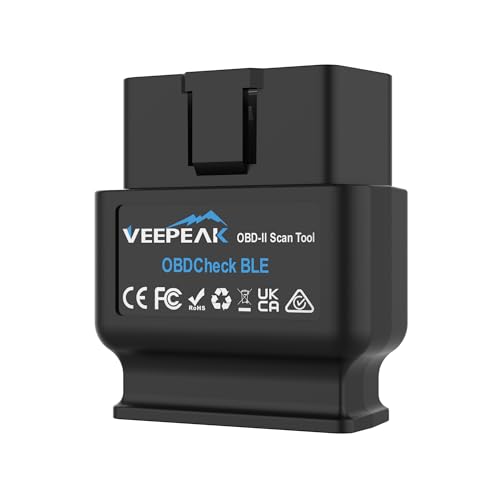
Veepeak Bluetooth OBD II Scanner for iOS & Android
The Veepeak Bluetooth OBD II Scanner offers a convenient and wireless way to diagnose check engine light issues and monitor vehicle health. Compatible with most 1996 and newer cars and light trucks, it provides essential diagnostic data through popular apps, making it an ideal tool for everyday vehicle maintenance.
Key Features:
- Read and clear generic trouble codes for check engine light (CEL/MIL).
- View freeze frame data, I/M readiness, and live sensor readings.
- Compatible with most 1996+ US cars and light trucks; limited EV support.
- Supports Bluetooth LE and Classic for Android; Bluetooth LE for iOS (connect via app, not phone settings).
- Works with apps like Car Scanner, Torque (Android), BimmerCode*, BimmerLink*, and others.
- Advanced diagnostics (e.g., ABS, SRS) and service functions usually not supported.
Pros
- Easy wireless connection via Bluetooth.
- Broad compatibility with many vehicles and apps.
- Provides real-time sensor data and trouble code details.
Cons
- Limited support for advanced diagnostics and some vehicle models.
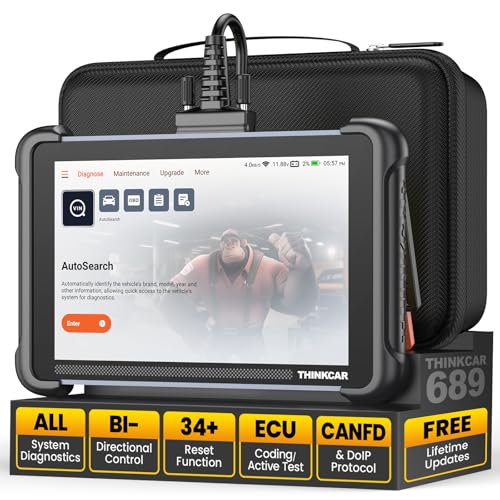
THINKCAR ThinkScan 689 OBD2 Car Diagnostic Scanner with Advanced ECU Coding
The THINKCAR ThinkScan 689 is a versatile OBD2 diagnostic scanner designed for comprehensive vehicle system checks and maintenance. Equipped with advanced ECU coding, bi-directional control, and over 34 reset functions, it supports more than 10,000 vehicle models. This tool offers real-time data, active testing, and multi-language support, making it ideal for car enthusiasts and professionals seeking accurate diagnostics and efficient vehicle repairs.
Key Features:
- Supports over 10,000 vehicle models with 140+ car brand compatibility
- Full system diagnosis including engine, transmission, ABS, airbag, SAS, DPF, TPMS, battery management, and more
- Real-time data display in text, graphic, and video formats with report saving
- 34+ maintenance reset functions such as oil reset, EPB, BMS, SAS, ABS, injector coding, transmission adaptation, and turbo reset
- Bi-directional control with 3000+ active tests for components like lighting, fuel injectors, and coolant pumps
- Advanced ECU coding for online adjustments like interior lighting, Auto Hold, dashboard customization, and auto start/stop disabling
- Built-in 4GB RAM and 64GB storage with CANFD & DoIP protocols support
- Multi-language support with 28 languages available
- 24/7 professional online service and in-app technical support
Pros
- Comprehensive diagnostics covering all vehicle systems
- Advanced ECU coding and active testing capabilities
- Lifetime free updates and extensive vehicle coverage
Cons
- Some ECU coding features depend on vehicle model and year
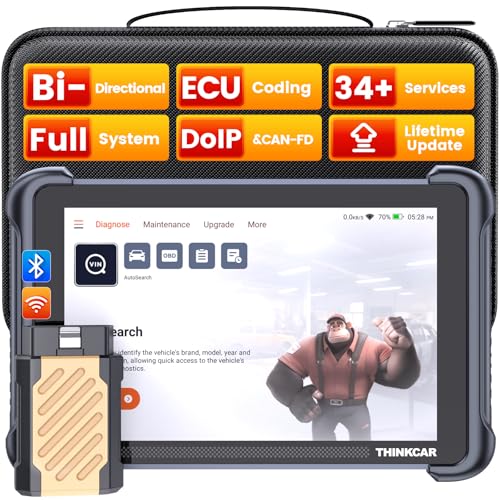
THINKCAR THINKSCAN 689BT Bi-Directional Automotive Diagnostic Scanner
The THINKCAR THINKSCAN 689BT is a powerful bi-directional automotive diagnostic tool designed for both DIY enthusiasts and professional mechanics. It supports over 140 vehicle makes and offers extensive features, including ECU coding, 34+ maintenance services, and all-system diagnostics. With fast wireless updates and an intuitive interface, it delivers quick and reliable vehicle diagnostics and active testing to improve repair efficiency and accuracy.
Key Features:
- Ready to use immediately without any complicated registration
- Wireless updates included at no extra cost, built on Android 10 with a 4-core CPU, 4GB RAM, and 64GB storage for fast performance
- Supports bi-directional control, ECU coding, and 34+ automotive services covering worldwide vehicle models
- Over 3000 active tests including EVAP, Fuel Trim Reset, Injector Buzz, Window/Mirror/Door Lock Tests, and more
- Advanced features like ECU coding, power balance, resetting adaptive data, customizing OE settings (e.g., interior light colors, auto hold, side mirror folding)
- OE-level diagnostics for all systems such as Engine, Transmission, Brake, TPMS, Battery, SRS, with real-time data display and report saving
- Supports 28 languages and 140+ car brands including passenger cars, pickups, hybrids, and SUVs
- FCA AutoAuth for 2018+ FCA vehicles, CAN FD and DoIP protocols for faster communication
- Includes gateway accessories and supports backup, making it suitable for repair shops and serious DIY users
Pros
- Comprehensive diagnostics with bi-directional control and ECU coding
- Fast and free wireless updates with no subscription fees
- Supports wide range of vehicles and offers extensive active testing capabilities
Cons
- FCA diagnostic features require separate FCA account registration and membership
- Some ECU coding functions vary depending on vehicle model and year
Understanding ECU Coding OBD-II Scanners: Why Should You Care?
Ever found yourself staring at your dashboard, wondering why that pesky check engine light just won't quit? Yeah, me too. That's where an ECU coding OBD-II scanner comes into play - a nifty tool that speaks 'car' and helps you make sense of what's going under the hood. But it's not just about reading error codes; these scanners can sometimes tweak and tune your vehicle's engine computer for better performance. Interesting, right? Let's chat about what makes these gadgets tick.
The Basics: What Does an ECU Coding OBD-II Scanner Do?
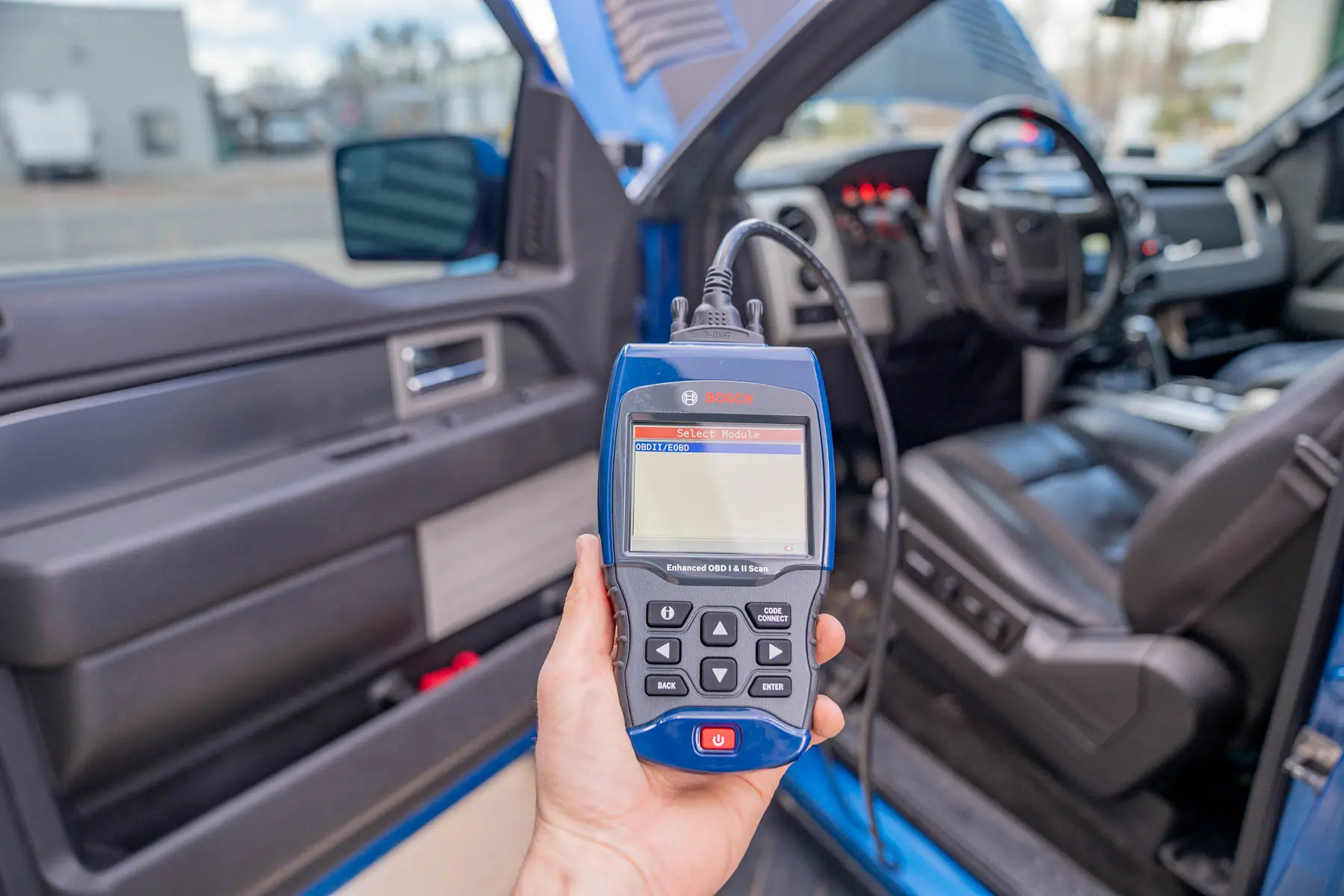
At its core, the scanner plugs into your car's onboard diagnostic port (usually under the dashboard) and communicates with the Engine Control Unit (ECU). The ECU is essentially your car's brain, managing everything from fuel injection to emissions. So when something feels off, your ECU sends out distress signals , commonly those dreaded error codes.
Reviews you may find interesting:
7 Best Transmission Code Readers (2026 Review Guide)9 Best Volkswagen OBD-II Scanners (2026 Review Guide)
8 Best Jump Starters With Built-In Air Compressors (2026 Review Guide)
OBD-II scanners let you:
- Read diagnostic trouble codes (DTCs)
- Clear trouble codes and turn off the check engine light
- View live data streams like engine RPM, temperature, and oxygen sensor readings
- Sometimes adjust parameters or reprogram settings (with coding features)
the coding part isn't just a fancy add-on; it's what separates simple code readers from more advanced tools that let you customize your car's behavior. This can be as subtle as adapting features or as daring as performance tuning.
Getting Friendly with Your Car's Computer: Coding vs. Reading
Reading codes is straightforward and usually safe. You connect, get a report, and can decide on the next steps - maybe a trip to the mechanic or a quick fix yourself. But when coding enters the scene, things get a bit trickier. Think of it like switching from reading the instructions to rewriting them.
For example, you might enable features that weren't activated from the factory or fine-tune fuel maps for better mileage. But caution: a wrong setting can throw your engine out of whack or even void warranties. So, if you're not quite the garage guru, it's best to tread lightly.
Picking the Right Scanner: What Should You Keep an Eye On?
With countless options flooding the market, how do you pick a scanner that won't just gather dust in your glove box? Here's something to consider:
- Compatibility: Ensure your scanner works with your car model and supports the functions you want, reading, coding, or both.
- User Interface: Simple screens and intuitive controls make using the tool easier, especially if you're not tech-savvy.
- Coding Capabilities: Are you looking to just diagnose, or do you want the ability to customize and reprogram?
- Software Updates: Regular updates are golden; they keep your scanner ready for new car models and emerging issues.
- Portability: A compact tool is easy to stash and use whenever you need it.
- Price Point: Of course, your budget matters, but remember, too cheap might mean less reliable.
By the way, Sometimes it pays off to read user reviews or even join car enthusiasts' forums to hear real stories about scanners before pulling the trigger.
Making the Most Out of Your ECU Coding Scanner
Once you've got your hands on a scanner, here's a little secret: the tool is only as good as the knowledge you bring to the table. Take some time to familiarize yourself with your car's systems, many manuals and online communities can be helpful.
Also, don't underestimate the power of software that often comes with the scanner. These programs can offer detailed insights beyond what just the scanner screen shows, helping you understand the data and possibly pinpoint underlying issues.
Oh, and here's a heads-up: always back up your ECU settings before making any changes. It's like saving your game before a boss fight, you don't want to lose progress or end up in a jam.
When to Call in the Pros
Let's be honest: while these scanners empower many to take control, some issues still need a mechanic's magic touch. If your car keeps throwing errors after your best efforts, or if the coding process feels over your head, don't hesitate to consult a professional. Sometimes, it saves money and heartache in the long run.
Wrapping It Up: Is an ECU Coding OBD-II Scanner Worth It?
If you're the type who loves getting hands-on with your car or just want to avoid costly mechanic bills for obvious problems, investing in a quality ECU coding OBD-II scanner makes sense. It's like having a translator and a toolset rolled into one, helping you speak your car's language and maybe even change the tune a bit.
Just remember, these devices aren't magic wands. They require curiosity, some learning, and a bit of patience. But trust me, once you get the hang of it, it's surprisingly rewarding, and a little empowering, to peek under the hood without popping the bonnet literally.