9 Best Car Power Inverters (2026 Review Guide)
The Best Ranked Car Power Inverter
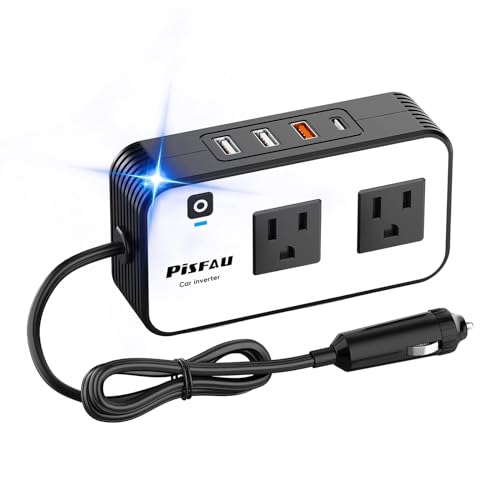
200W Car Power Inverter with Dual AC Outlets and 4 USB Ports
This 200W car power inverter converts your vehicle's 12V DC power to 110V AC, allowing you to charge laptops, tablets, and other electronic devices on the go. Featuring two AC outlets and four USB ports, including a fast-charging USB-C port, this compact and lightweight adapter is designed for convenience and safety during travel.
Key Features:
- Two U.S. standard AC outlets for powering laptops, tablets, and other electronics
- Four USB ports including one 20W USB-C fast charger and three additional USB ports totaling 4.8A
- Compact and lightweight design (2.7 x 1.4 x 5 inches, 8.5 oz) ideal for portability
- Built-in safety protections against overheating, undervoltage, overvoltage, overload, and short circuits
- Durable ABS insulated shell for enhanced safety and heat dissipation
Pros
- Multiple charging options with dual AC outlets and four USB ports
- Compact size makes it easy to carry and store
- Advanced safety features protect your devices and vehicle
Cons
- Power output limited to 200W, which may not support high-demand devices
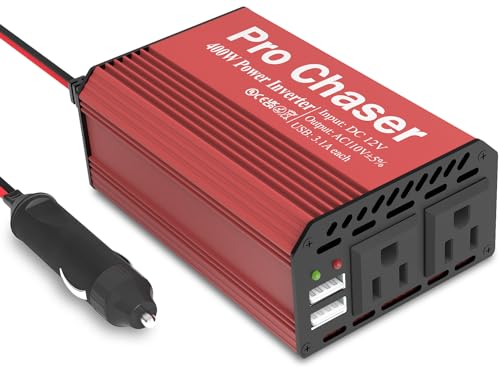
Pro Chaser 400W Vehicle Power Inverter with Dual USB and AC Outlets
The Pro Chaser 400W power inverter converts your vehicle's 12V DC power into stable 110V AC power, allowing you to charge and operate multiple devices while on the go. Compact and portable, it features dual AC outlets and dual high-speed USB ports, making it ideal for road trips, outdoor activities, and everyday use. Built-in safety protections provide reliable and secure operation, ensuring peace of mind during use.
Key Features:
- Provides 400W continuous power with a peak output of 800W
- Includes two 110V AC outlets and two 3.1A USB ports for simultaneous device charging
- Compact size with a 30-inch power cord for flexible placement
- Built-in protections against overload, voltage fluctuations, and overheating
- Smart cooling fan activates at 113F (45C) to maintain safe temperatures
- Comes with a 12-month warranty
Pros
- Supports multiple devices with dual AC and USB ports
- Compact and easy to carry
- Effective safety features including cooling fan and overload protection
Cons
- Should be used in cool, dry environments to prevent overheating
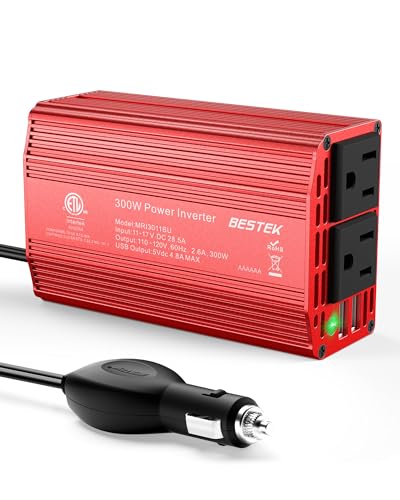
BESTEK 300W Car Power Inverter with Dual USB Charging Ports
The BESTEK 300W car power inverter converts 12V DC to 110V AC, allowing you to charge laptops, tablets, and other electronics conveniently while on the road. Its compact design, dual AC outlets, and two fast USB ports make it perfect for travel and outdoor use. With built-in safety features and durable aluminum housing, this inverter offers reliable and quiet performance.
Key Features:
- 300 watts continuous power and 700 watts peak power
- Two 110V AC outlets for charging laptops and larger devices
- Two 4.8A USB ports for fast charging of phones and tablets
- Compatible with 11-17V systems, including Tesla vehicles
- Built-in 40A fuse for protection against overheating, voltage issues, and short circuits
- Durable aerospace-grade aluminum casing with silent smart cooling fan
- Compact, lightweight design with a 32-inch cigarette lighter plug for easy use in vehicles
- ETL certified with a 5-year warranty and 24/7 customer support
Pros
- Supports multiple devices with dual AC outlets and fast USB ports
- Robust safety features prevent damage to your electronics
- Compact and lightweight for convenient travel use
Cons
- Fan noise may increase under heavy load beyond 70W
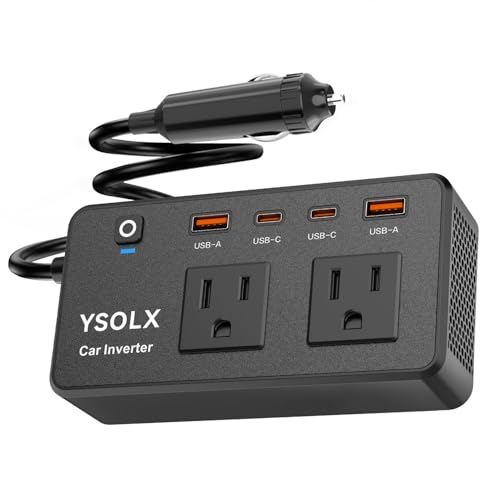
300W Dual USB Car Power Inverter with AC Outlets
This compact 300W power inverter converts your car's 12V DC into 110V AC power, allowing you to charge multiple devices on the go. Equipped with dual AC outlets and four USB-C/A ports, it's perfect for charging laptops, phones, cameras, and other electronics during travel or outdoor adventures. The built-in intelligent cooling fan ensures quiet and reliable operation, making it an essential portable power solution for road trips, camping, and mobile offices.
Key Features:
- Dual 110V AC outlets and four USB-C/A ports delivering up to 24W for simultaneous device charging
- Connects easily to a vehicle's 12V cigarette lighter socket for convenient power access
- Ideal for powering laptops, smartphones, cameras, small appliances, and more while traveling or camping
- Quiet intelligent cooling fan enhances performance and extends device lifespan during extended use
- Compact and lightweight design measuring 5.4 x 2.75 x 1.4 inches and weighing 9.17 oz for easy portability
- Supports up to 300W continuous power; not suitable for high-power devices like hair dryers or heaters
Pros
- Multiple charging ports for versatile device compatibility
- Quiet and efficient cooling system
- Compact and lightweight for easy transport
Cons
- Cannot support high-power electrical appliances
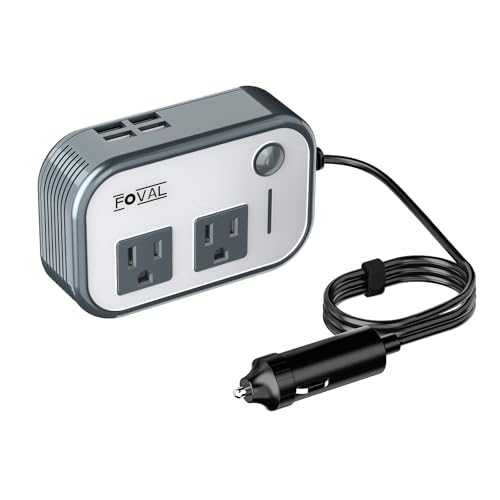
200W Car Power Inverter with 2 AC Outlets and 4 USB Ports
This compact 200W car power inverter converts 12V DC to 110V AC, allowing you to charge and power multiple devices on the go. Equipped with two AC outlets and four USB ports, it's ideal for laptops, smartphones, tablets, and other electronics while traveling. Its built-in smart cooling fan and multi-protection system ensure safe and quiet operation. Lightweight and portable, this inverter is a versatile power solution for your vehicle.
Key Features:
- 200W power capacity with 2 AC outlets and 4 USB ports for simultaneous device charging
- Compact size (3.2 x 2.5 x 1.5 inches) and lightweight design (8 oz) for easy portability
- Built-in safety protections including short-circuit, low/high voltage, overload, over-temperature, and fuse
- Smart cooling fan operates quietly and adjusts speed based on temperature
- Compatible with 12V car systems only; not suitable for high-power devices like hair dryers or heaters
Pros
- Multiple charging ports support AC and USB devices simultaneously
- Compact and lightweight, easy to carry and store
- Comprehensive safety features protect devices and vehicle
Cons
- Not compatible with high-power electrical equipment
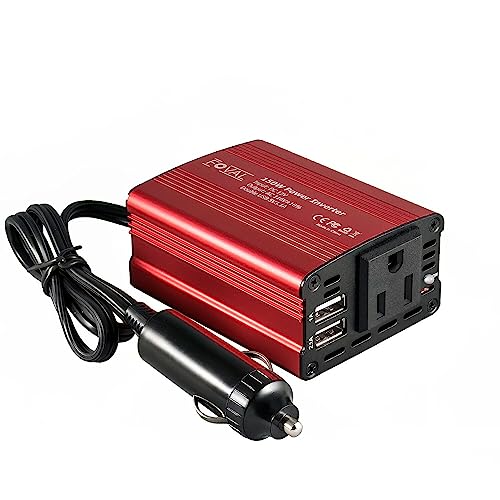
FOVAL 150W Car Power Inverter with Dual USB and AC Outlet
The FOVAL 150W car power inverter converts your vehicle's 12V DC power to a 110V AC outlet, allowing you to charge and power multiple devices on the go. Compact and lightweight, it features dual USB ports for fast charging smartphones and tablets, plus an AC outlet suitable for laptops and other electronics. Built with safety protections and a quiet cooling fan, it's ideal for road trips, work, and mobile living.
Key Features:
- Provides 150W continuous power by converting 12V DC to 110V AC.
- Includes 2 USB ports with a combined 3.1A output for fast charging phones and tablets.
- One AC outlet supports laptops and various household electronics.
- Compact design (3.2 x 2.5 x 1.5 inches) with lightweight aluminum casing for portability.
- Built-in fuse and protections against overheating, voltage fluctuations, short circuits, overloads, and overcharging.
- Quiet cooling fan to reduce heat and prevent short circuits.
Pros
- Compact and lightweight, easy to carry and store.
- Multiple charging options including AC outlet and dual USB ports.
- Comprehensive safety features protect both device and vehicle.
Cons
- Limited to 150W power output, which may not support higher wattage devices.
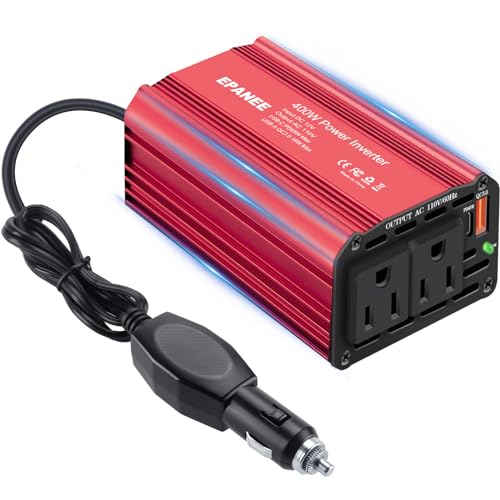
400W Car Power Inverter with USB-C PD 65W and QC 18W Ports
This 400W car power inverter efficiently converts 12V DC to 110V AC, allowing you to power laptops, small appliances, and charge your devices on the go. It features dual AC outlets alongside a fast-charging USB-C PD 65W port and a QC 18W USB-A port, making it ideal for road trips, camping, or everyday vehicle use. Built-in safety features and a quiet cooling fan ensure reliable performance and protection during extended use.
Key Features:
- 400W continuous power output with 800W peak power.
- Dual 110V AC outlets for powering laptops, air compressors, and other devices.
- One 65W USB-C Power Delivery port and one 18W Quick Charge USB-A port for fast charging smartphones and tablets.
- Built-in fuse protection against short circuit, overload, low voltage, over voltage, and overheating.
- Automatic cooling fan activates above 113F (45C) with variable speed for quiet, efficient cooling.
- Compact and lightweight design (6.7 x 4.5 x 2.5 inches, 0.88 lb) with a 21.65-inch cable for easy portability.
- Plugs directly into the car cigarette lighter socket for convenient use.
Pros
- Fast charging USB ports compatible with a wide range of devices.
- Multiple safety protections ensure safe operation.
- Quiet and efficient cooling fan extends device longevity.
Cons
- Limited to powering devices under 400W, not suitable for high-power appliances.
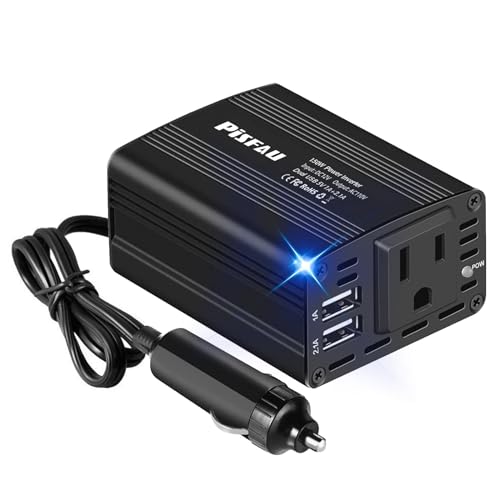
150W Car Power Inverter with Dual USB Charger
This compact 150W power inverter converts 12V DC to 110V AC, allowing you to charge laptops, tablets, and other electronic devices on the go. Equipped with dual USB ports and built-in safety features, it ensures reliable and safe power delivery during travel.
Key Features:
- Provides 150W continuous power and 300W peak power for various electronic devices
- 110V AC outlet for charging laptops and larger devices
- Two USB ports delivering 3.1A for fast charging of compatible devices
- Built-in smart chip and fuse for automatic fault detection and protection
- Compact and lightweight design (3.4 x 2.5 x 1.5 inches, 8 oz) for easy portability
- Durable metal housing protects against shocks and drops
- Safety protections include overheating, reverse connection, under/over voltage, overload, and short circuit prevention
Pros
- Supports continuous and peak power for multiple device types
- Dual USB ports for simultaneous charging
- Comprehensive built-in safety features
Cons
- Limited to 150W continuous output, not suitable for high-power appliances
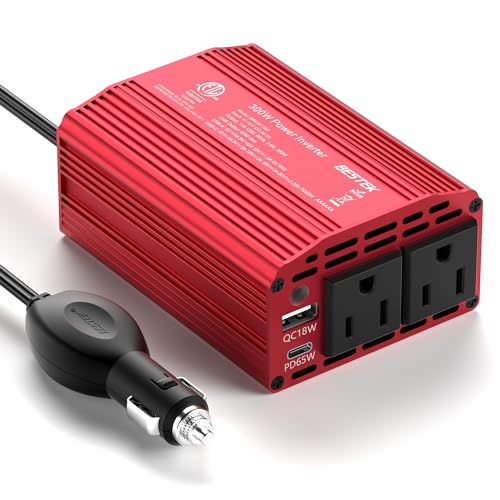
300W Car Power Inverter with USB-C and QC3.0 Charging Ports
This 300W car power inverter offers reliable power conversion from 12V DC to 110V AC, allowing you to charge and operate multiple devices on the go. Equipped with fast charging USB-C and QC3.0 USB-A ports, it supports up to four devices simultaneously while ensuring safety with built-in protection features and a smart cooling fan. Its compact design makes it ideal for travel, work trips, and outdoor adventures.
Key Features:
- 300 watts continuous power and 700 watts peak power with 2 AC outlets
- 65W USB-C port supports fast charging compatible with devices like MacBook Pro
- 18W USB-A QC3.0 port for quick charging of smartphones and tablets
- Can power up to 4 devices at the same time, including laptops, cameras, and small appliances
- Built-in intelligent cooling fan adjusts speed based on temperature and load to reduce noise
- Multiple safety protections: fuse, overheat, undervoltage, overvoltage, overload, and short circuit
- Compact, lightweight design with a 24-inch cigarette lighter plug compatible with most vehicles
- ETL certified with 5-year warranty and responsive 24/7 customer support
Pros
- Supports fast charging with a 65W USB-C port
- Multiple safety features ensure device and battery protection
- Compact size ideal for travel and outdoor use
Cons
- May not support high-wattage devices beyond 300W limit
What's a Car Power Inverter Anyway?
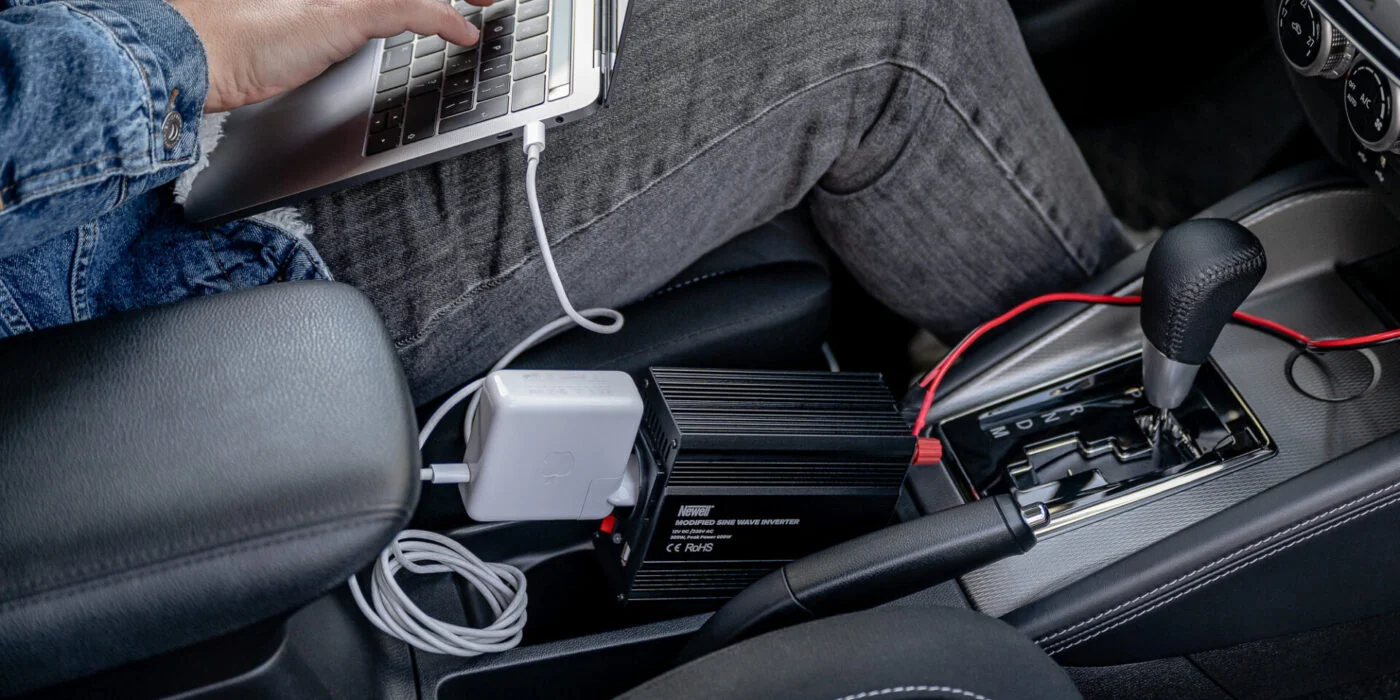
If you've ever been stuck in traffic, craving a quick phone charge, or needed to power up a laptop away from an outlet, a car power inverter suddenly sounds like a lifesaver, doesn't it? Simply put, this device converts your car's DC (direct current) power into AC (alternating current), the stuff your usual home appliances run on. So, basically, it turns your car into a mini power station on wheels.
Why This Little Gadget Could Be a Game Changer
Imagine making a pitstop on a road trip and plugging in your blender for some fresh smoothies, or keeping your gaming console active during those long waits. A power inverter makes all that possible. It's not just about convenience; it's about turning your car into a reliable source of power during emergencies, camping, or even while tailgating.
But, hold on, there's a catch
Not all inverters are created equal, and picking one feels a bit like sorting through a sea of technical jargon. Wattage, sine wave types, ports, and even built-in protections, there's a lot to consider. Let's break it down into manageable chunks.
Size Does Matter: Decoding Wattage
Reviews you may find interesting:
9 Best Brake Cleaners (2026 Review Guide)9 Best Car Polishers (2026 Review Guide)
7 Best Portable Air Compressors (2026 Review Guide)
First off, pay close attention to wattage, which tells you how much power an inverter can provide. Got a laptop that needs 70 watts and a phone charger pulling 15 watts? Add those numbers up, tack on a bit extra just to be safe, and find an inverter that handles that load comfortably. Remember, going too large isn't always better; a big inverter can drain your battery faster and cost more than needed.
Pure Sine Wave vs. Modified Sine Wave: What's the Difference?
Here's a subtle but important nuance. Pure sine wave inverters deliver power that mimics the smooth, clean waveforms from your home outlets, making them perfect for sensitive electronics like medical devices, laptops, or smart TVs. Modified sine wave units are simpler and cheaper but can cause buzzing noises or possible damage over time if used with delicate gadgets.
By the way, For most folks who just want to charge phones or operate simpler devices, a modified sine wave inverter does the job just fine, but if you care about quality and longevity, pure sine wave is your safer bet.
Connectivity and Convenience: More Than Just a Plug
These days, power inverters often come equipped with multiple outlets, AC sockets, USB ports, and sometimes even quick-charge capabilities. Handy, right? Think about how many devices you carry around: smartphones, tablets, cameras, maybe even a portable fridge during your summer escapades. Having versatile ports means you can keep them all powered without swapping cables or adapters every minute.
Bonus tip: If you're planning a camping trip, a USB-C port might be a welcomed feature, considering how many gadgets rely on that standard nowadays.
Safety First: Don't Let Your Car Battery Become a Victim
It's tempting to keep your inverter running when the engine's off, but here's where many people stumble. Running a high-powered inverter can drain your car battery quickly, leaving you stranded. To avoid that headache, it's best to use your inverter while the engine's running or have a dedicated deep-cycle battery for power loads if you're a frequent user.
Most quality inverters come with built-in protections, like overload, overheating, and low voltage shut-off, which act like little guardians watching over both your devices and vehicle.
Alright, But How Easy Are They to Use?
Honestly, modern car power inverters are pretty straightforward. You plug the inverter into your cigarette lighter or directly hook it up to the battery terminals for larger power demands. Once connected, plug your device into the inverter just like you would an outlet. But a word to the wise: if you're dealing with high-wattage appliances, connecting direct to the battery is safer and more effective.
Also, it's wise to keep an eye on your car's idle time and inverter's temperature to avoid accidents. Some units even come with remote controls or display screens showing battery status and load, which is a neat touch.
Why You'll Want One in Your Car Yesterday
Cars today are more than just transportation; they're mobile command centers and extensions of our digital lives. Having a reliable power inverter means never worrying about dead batteries for your essentials. Plus, during unexpected stranded moments, a power inverter can turn a frustrating night into just a minor hiccup.
Think about winter road trips when heating pads or portable fans become crucial, or summer camping where keeping food fresh is mission critical. It's that unsung hero that quietly keeps things humming.
Wrapping It Up: What Should You Look For?
- Wattage: Match the inverter power with your device needs, adding a margin for safety.
- Waveform: Pure sine wave for sensitive electronics, modified sine wave for basic devices.
- Ports: Multiple outlets and USB ports add convenience for various gadgets.
- Safety Features: Overload, temperature, and low voltage protections keep both you and your gear safe.
- Installation: Cigarette lighter plug for casual use or direct battery connection for heavy-duty needs.
So, whether you're a weekend warrior, a daily commuter, or simply someone who hates running out of juice far from home, a car power inverter is a practical tool to have. It's a little investment that pays dividends in convenience, safety, and peace of mind.
Feel that tingle of anticipation yet? That's the lure of having power exactly when and where you want it, right in your trusty car.