9 Best Brake Cleaners (2026 Review Guide)
The Best Ranked Brake Cleaner
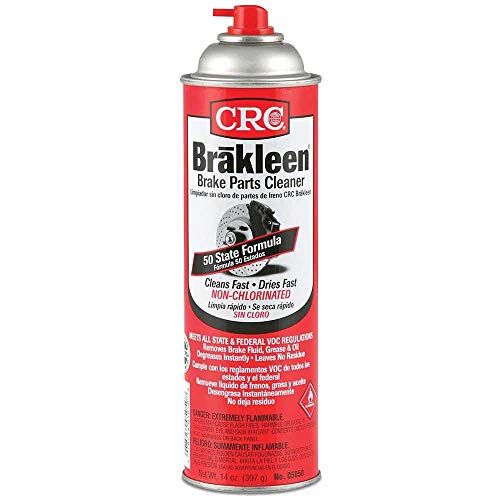
CRC Brakleen Brake Parts Cleaner with PowerJet Technology
CRC Brakleen Brake Parts Cleaner offers quick and efficient degreasing of brake components with its powerful spray. Formulated to meet all state and federal VOC regulations, it leaves no residue behind, ensuring clean and reliable brake maintenance.
Key Features:
- Compact package measuring 9.45 x 2.75 x 2.6 inches
- Lightweight at just over 1 pound
- PowerJet spray technology for effective contaminant removal
- Low VOC formula compliant with all state and federal regulations
- Leaves no residue after use
Pros
- Powerful spray quickly removes grease and contaminants
- Environmentally friendly low VOC formula
- No residue ensures clean brake parts
Cons
- Package size may be small for heavy-duty users
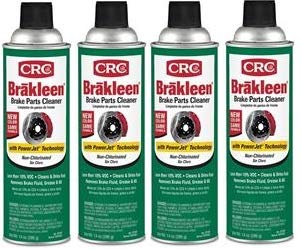
Non-Chlorinated Brake Parts Cleaner - 14 oz, 4-Pack
This non-chlorinated brake parts cleaner effectively removes grease, oil, and brake fluid from brake components without harmful chemicals. The convenient 14-ounce cans come in a pack of four, providing great value for regular maintenance and repair tasks.
Key Features:
- Contains four 14-ounce cans
- Safe, non-chlorinated formula
- Effectively cleans brake parts from grease and oil
Pros
- Non-chlorinated formula is safer for use and the environment
- Four cans offer excellent value and supply
- Cleans brake parts thoroughly without leaving residue
Cons
- 14-ounce cans may require frequent replacement for heavy users
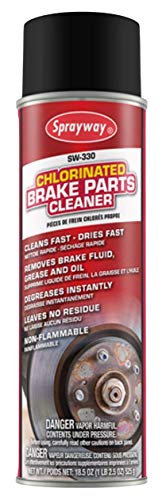
Sprayway Chlorinated Brake Parts Cleaner, 18.5 oz
This Chlorinated Brake Parts Cleaner quickly removes brake fluid, grease, and oil from brake parts, leaving them clean and residue-free. It dries rapidly and is non-flammable, making it a reliable choice for efficient brake maintenance.
Key Features:
- Cleans and dries quickly
- Effectively removes brake fluid, grease, and oil
- Degreases brake parts instantly
- Leaves no residue after use
- Non-flammable formula for safety
Pros
- Fast drying and cleaning action
- Leaves brake parts completely residue-free
- Safe non-flammable formula
Cons
- Chlorinated formula may require proper ventilation
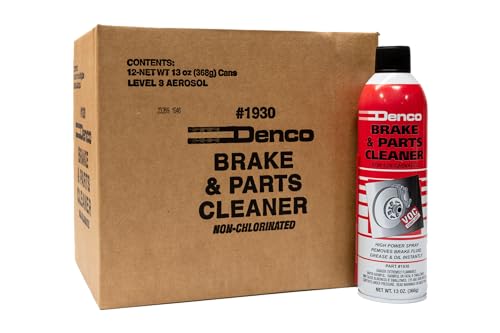
Denco Brake & Parts Cleaner, 13 oz
Denco Brake & Parts Cleaner is a powerful solution designed to quickly remove oil, grease, and other contaminants from brake components and metal surfaces. Its fast-drying formula with low odor and low VOC makes cleaning efficient and environmentally considerate. Ideal for maintaining calipers, rotors, and pads, this cleaner offers high pressure spray and minimal runoff for an easy cleanup.
Key Features:
- Removes oil and grease quickly
- Works effectively on metal surfaces like calipers, rotors, and pads
- Low odor and low VOC formula
- Fast-drying with minimal runoff
- Contains 51% acetone for strong cleaning power
- High pressure spray from full to empty
Pros
- Efficiently cleans brake parts and metal surfaces
- Fast drying and low odor for convenience
- High pressure spray ensures thorough coverage
Cons
- Restricted sale in certain states
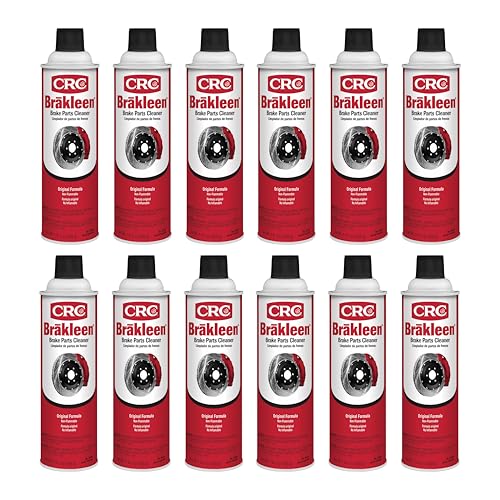
CRC Brakleen Non-Flammable Brake Cleaner Spray, 19 oz (12 Pack)
CRC Brakleen offers a powerful, non-flammable formula designed to clean brake components thoroughly, promoting better braking performance and extending the life of your vehicle's brake system. It effectively removes dirt, grease, and brake dust without leaving any residue, making it suitable for a variety of brake parts.
Key Features:
- Effectively cleans brake and disc parts to enhance performance and durability
- Suitable for use on spring brakes, wedge brakes, brake cylinders, drums, linings, shoes, calipers, clutch discs, and disc brake pads
- Non-flammable formula that evaporates quickly without residue
- Comes in a convenient 19 oz spray can, packaged as a 12-pack
- Developed by CRC Industries, a trusted name in automotive chemical products
Pros
- Non-flammable and safe for all brake components
- Fast-drying and residue-free cleaning action
- Comes in a bulk 12-pack, ideal for frequent use or workshops
Cons
- Spray cans may run out quickly if used on large brake servicing jobs
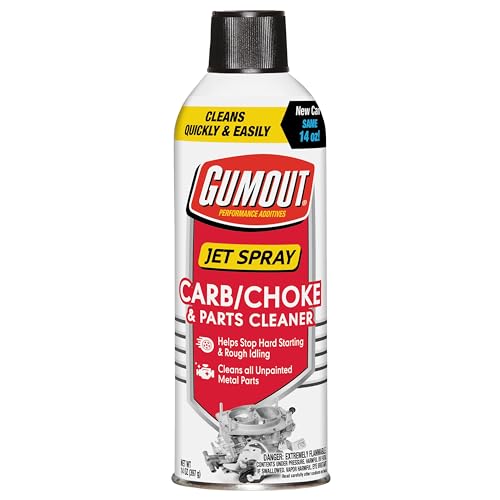
Gumout Carburetor and Choke Cleaner Spray, 14 oz
This Gumout Carburetor and Choke Cleaner Spray effectively removes gum, varnish, and dirt from both the inside and outside of carburetors and choke valves. It helps improve engine performance by preventing buildup that causes hard starting, rough idling, stalling, and high emissions. Its quick-drying formula cleans metal parts thoroughly, promoting better fuel economy and smoother operation.
Key Features:
- Eliminates hard starting, rough idling, stalling, and high exhaust emissions
- Removes deposits inside and outside the carburetor to boost engine performance and fuel efficiency
- Cleans gum, varnish, and dirt from clogged carburetors and choke valves
- Quick-drying formula safe for unpainted metal parts
Pros
- Improves engine start-up and smoothness
- Enhances fuel economy by clearing deposits
- Quick-drying and easy to use
Cons
- May require repeated use for heavily clogged carburetors
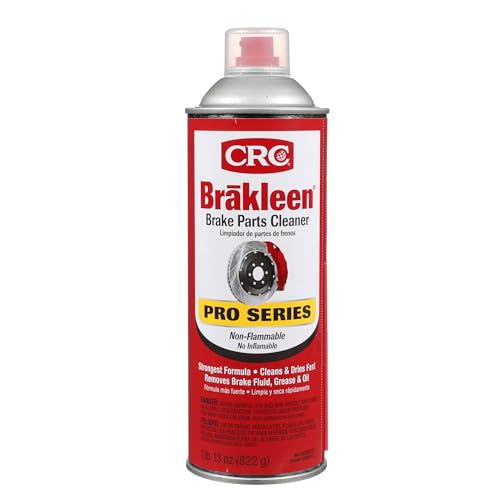
CRC Brakleen Non-Flammable Brake Cleaner Spray, 29 oz
CRC Brakleen Brake Cleaner is designed to effectively clean brake and disc parts, enhancing the performance and longevity of your vehicle's braking system. Its non-flammable formula makes it safe for use on all brake components, helping maintain safety and efficiency on the road.
Key Features:
- Effectively cleans brake parts to improve braking system performance and durability
- Suitable for use on various brake components including spring brakes, wedge brakes, cylinders, drums, linings, shoes, calipers, clutch discs, and disc brake pads
- Non-flammable formula safe for all brake system parts
- Convenient 29 oz spray can for easy application
- Produced by CRC Industries, a trusted leader in automotive and industrial chemical solutions
Pros
- Non-flammable and safe for all brake components
- Cleans a wide range of brake and clutch parts
- Reliable brand known for quality chemical products
Cons
- Spray can may run out quickly with frequent use
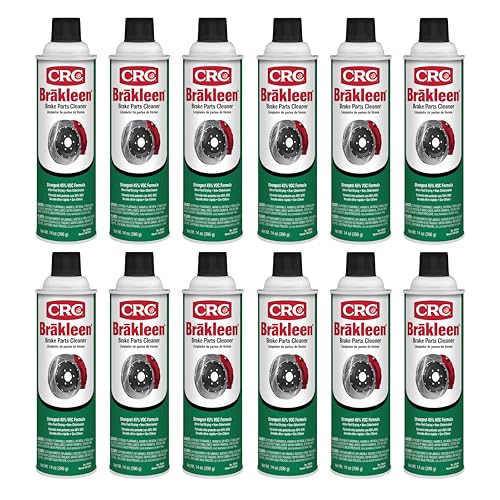
Brakleen Non-Chlorinated Brake Parts Cleaner - 14 oz, 12 Pack
This Brakleen brake parts cleaner effectively removes brake fluid, grease, oil, and other contaminants from various brake components. Its non-chlorinated formula with low VOCs ensures strong cleaning power while being safer for the environment. Ideal for cleaning brake cylinders, drums, linings, shoes, calipers, and clutch discs.
Key Features:
- Non-chlorinated brake parts cleaner
- Low volatile organic compounds (VOC) formulation
- Removes brake fluid, grease, oil, and contaminants from brake components
- Suitable for use on brake cylinders, drums, linings, shoes, calipers, and clutch discs
- 14-ounce bottle, pack of 12
Pros
- Effective at removing tough brake contaminants
- Low VOC formula is more environmentally friendly
- Convenient 12-pack ensures long-term availability
Cons
- Spray nozzle could provide better precision
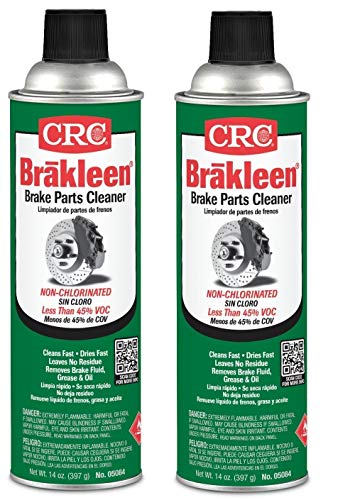
CRC Brakleen Non-Chlorinated Brake Parts Cleaner - 2 Pack
This non-chlorinated brake parts cleaner effectively removes brake fluid, grease, oil, and other contaminants from brake linings and pads. Designed for quick and efficient cleaning, it's ideal for situations that require a chlorine-free solution. Note that it is highly flammable and not available for sale in California or Catalina Island.
Key Features:
- Chlorine-free formula compliant with environmental regulations
- Quickly removes brake fluid, grease, oil, and contaminants
- Suitable for cleaning brake linings and pads
- Highly flammable , use with caution
- Not available for sale in California and Catalina Island
Pros
- Effective cleaning of brake components
- Environmentally compliant chlorine-free formula
- Fast-acting and efficient
Cons
- Extremely flammable , requires careful handling
Why Should You Care About Brake Cleaner?
Let's be honest: brakes don't get the love they deserve until something goes wrong. Yet, these unsung heroes of your car keep you safe every time you hit the road. Dirt, grease, and stubborn brake dust can sneak in where you least want them, making your brakes squeak or even underperform. That's where a good brake cleaner steps in. But with so many options out there, figuring out which cleaner actually lives up to the hype can feel like searching for a needle in a haystack.
What's So Special About Brake Cleaner Anyway?
You might wonder, "Why not just spray some soap and water or use a general-purpose degreaser?" You should know that brake systems have sensitive parts and materials that need special care. Brake cleaner is formulated to blast away grease, oil, brake fluid, and dust without leaving any film behind. It evaporates super fast, so you're not left waiting forever for things to dry off. Plus, it's safe on the metal, plastic clips, and rubber seals that make your brakes function smoothly.
Reviews you may find interesting:
7 Best Car Debadgers (2026 Review Guide)7 Best Trailer Hitch Locks (2026 Review Guide)
7 Best Car Battery Chargers (2026 Review Guide)
It's Like a Spa Day for Your Brakes
Imagine your brakes as muscles that get tense when clogged with grime. Regular cleaning helps them relax, perform better, and even avoid annoying noises. Besides, who wants to deal with that embarrassing squeal when braking suddenly?
How to Tell Which Brake Cleaner Works for You
Choosing a brake cleaner could feel like stepping into an overwhelming supermarket aisle packed with options claiming to be "the best." But a few simple points can make your decision a ton easier.
- Effectiveness: Will it cut through grease and dirt quickly? You want a cleaner that doesn't make you scrub like you're polishing silver.
- Evaporation Speed: Faster evaporation means less downtime. Don't get stuck waiting for things to dry.
- Non-corrosive Formula: The last thing you need is a cleaner that eats away at your brake components. Check if it's safe on metals and rubber.
- Ease of Application: A spray nozzle or aerosol that reaches awkward parts helps you cover all the nooks and crannies.
- Fume Level: Brake cleaners tend to have strong odors. If you're working in a cramped space, consider ventilation or lower-fume options.
Ready to Clean? Here's How to Do It Right
Before you grab the spray can, a couple of words of advice, brake cleaner isn't your everyday household cleaner. It's potent stuff, and safety comes first.
- Work in a Well-Ventilated Area: Those fumes can knock you out more easily than you'd expect.
- Wear Gloves and Eye Protection: You don't want those chemicals splashing on your skin or eyes.
- Park Your Car on a Flat Surface: Prevent any slipping and make sure the wheels are cool, not hot from recent driving.
- Remove the Wheel: This might require a jack, but it's worth it for thorough cleaning.
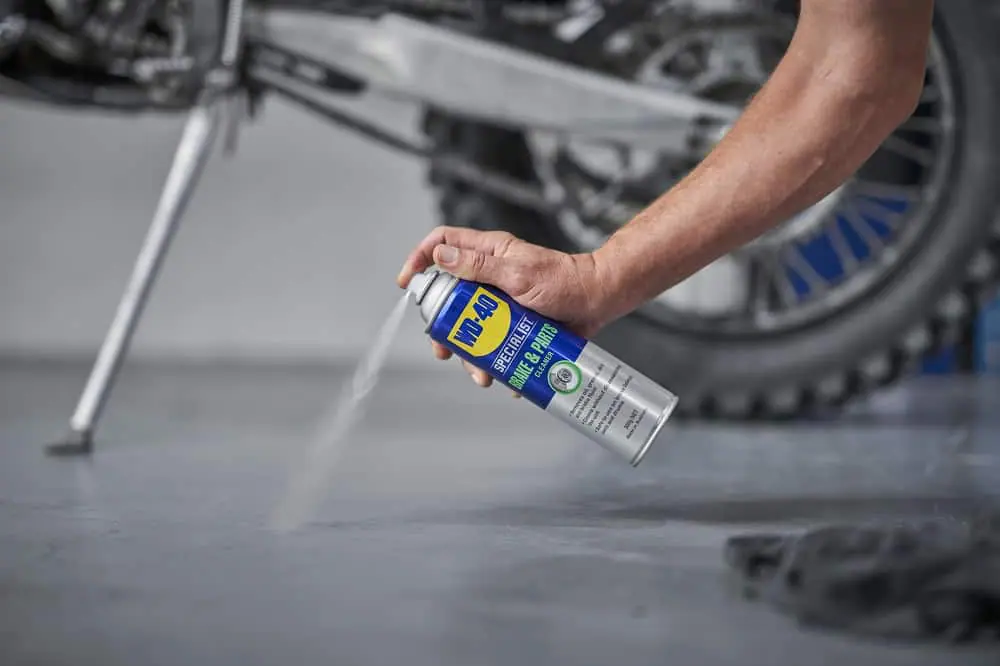
- Spray and Let it Work: Apply the brake cleaner liberally on the rotor, caliper, and pads. Watch grime melt away almost instantly.
- Wipe if Needed: Usually, the cleaner evaporates on its own. But stubborn spots may need a quick wipe.
- Reassemble and Take a Test Drive: Nothing like a smooth ride to tell you your brakes are happy again.
You Know What? Taking the Time Makes a Big Difference
It might feel like a lot upfront, but keeping your brakes clean is a little effort that pays off in smooth stopping power and longer component life. Plus, who wants to hear that annoying squeak every time they stop for their morning coffee?
When Do You Really Need to Reach for That Can?
Braking systems don't need cleaning all the time, but there are clear signs it's time to take action. Squealing or grinding noises, uneven brake wear, or a spongy brake pedal can all hint at grime holding your brakes hostage. And if you're replacing brake pads, cleaning the components beforehand is just smart practice to make sure your new parts work perfectly.
Are There Any Gotchas?
While brake cleaner is mighty useful, but misuse can cause headaches. Avoid spraying near painted surfaces or rubber hoses not designed to handle solvents. And those flammable fumes? Keep the cleaner away from sparks or open flames. Also, never apply brake cleaner to hot brakes, wait for them to cool down. You wouldn't pour ice water on a hot pan, right? Same idea.
Wrapping It Up: Clean Brakes, Peace of Mind
Brake cleaner might seem like a small detail, but it's a secret weapon for vehicle safety and maintenance. Think of it as a quick tune-up that clears out brake dust and grime, giving your brakes the chance to perform their best, quietly and reliably. the next time your brakes start humming a bit too loudly or feel less responsive, you'll know exactly what to do.
Honestly, taking a few minutes to clean your brakes with the right cleaner can save you money, hassle, and maybe even a stress-filled roadside stop. It's a straightforward task, and your car will thank you for it, one silent, smooth stop at a time.