8 Best Oil Extractors (2026 Review Guide)
The Best Ranked Oil Extractor
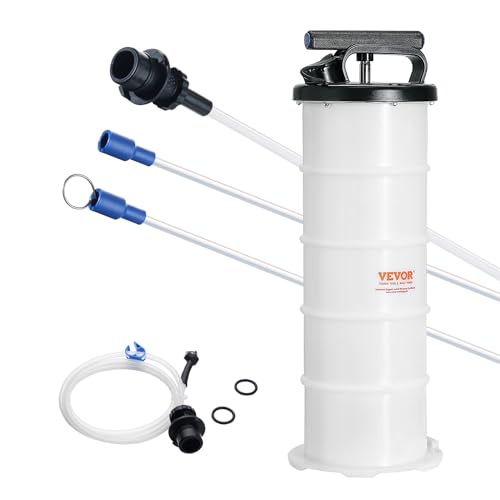
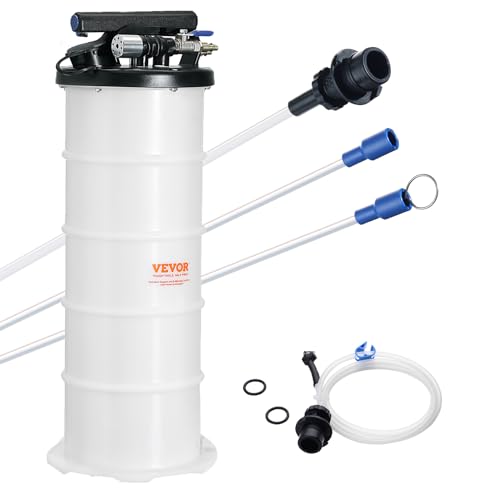
6.5L Manual Fluid Extractor Pump for Automotive Oil and Fluid Changes
This 6.5L manual fluid extractor pump is a versatile and easy-to-use tool designed for efficiently removing oil and other fluids from vehicles and equipment. It comes with multiple tubes and a dipstick to ensure thorough extraction from various reservoirs, making oil and fluid changes quicker and cleaner.
Key Features:
- Manual operation requires no additional equipment, ensuring simple and efficient use.
- Includes a 6.5L tank, main tube, two extension tubes, a suction hose, dipstick, and sealing rings for comprehensive fluid extraction.
- Four different tube sizes allow access to deep and hard-to-reach areas, ensuring thorough removal of fluids.
- Simple four-step process: select a tube, use the dipstick, pump to extract fluid, and pour it out cleanly.
- Suitable for extracting engine oil, gear oil, power steering fluid, brake fluid, and more from cars, motorcycles, boats, lawnmowers, and tractors.
Pros
- Easy manual operation with no need for electricity or compressed air.
- Comes with all necessary accessories for versatile fluid extraction.
- Effective for a wide range of vehicles and fluid types.
Cons
- Manual pumping can be tiring for large volume extractions.
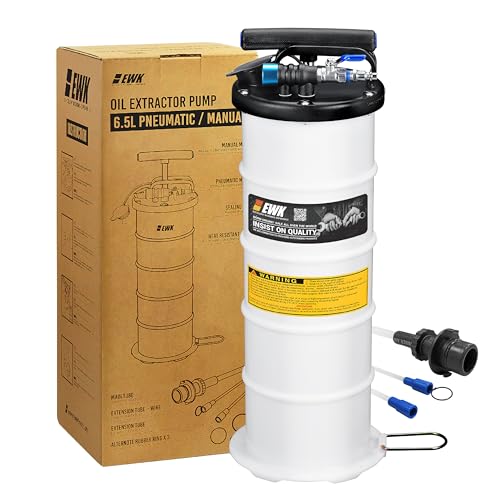
6.5L Pneumatic and Manual Oil Extractor Pump
This oil extractor pump offers a convenient, spill-free way to change automotive fluids at home or in the shop. Featuring both pneumatic and manual modes, it efficiently removes oil and other fluids through the dipstick tube without lifting the vehicle. Designed for versatility and durability, it works with a wide range of engines and fluids, making it an essential tool for DIY mechanics and professionals alike.
Key Features:
- Extract oil through the dipstick tube for a clean and simple oil change without lifting the car.
- Dual-mode operation: manual for portability or pneumatic for faster fluid extraction up to 1.8 L/min.
- Includes two extended suction tubes that reach deep to remove nearly all fluid from the reservoir.
- Compatible with engine oil, transmission fluid, coolant, and power steering fluid across many vehicles and machines.
- Durable, precision-sealed tank and tubing designed for long-lasting use in garages and repair shops.
Pros
- Dual manual and pneumatic operation offers flexibility for various work situations.
- Extended suction tubes ensure thorough fluid removal for better engine maintenance.
- Compatible with multiple vehicle types and various automotive fluids.
Cons
- Not suitable for some specific vehicle models and should not be used with gasoline or highly volatile fluids.
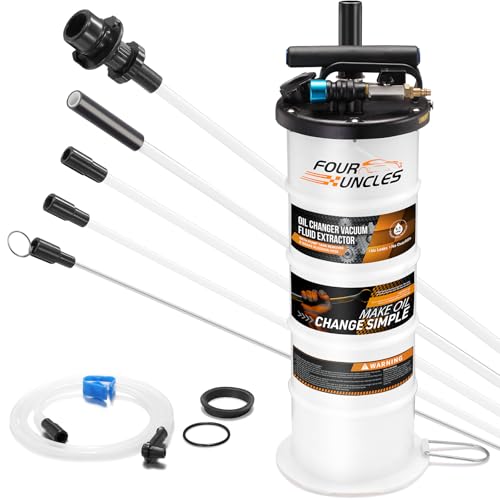
6.5L Pneumatic and Manual Oil Extractor Pump for Automotive Fluids
This 6.5L oil extractor pump offers both pneumatic and manual operation modes, making fluid extraction quick and easy. Designed to handle a variety of automotive fluids, it comes with multiple tube sizes for thorough fluid removal from different vehicles and equipment. Its simple, all-in-one design ensures a clean and efficient oil or fluid change while keeping your hands free from mess.
Key Features:
- Dual operation modes: pneumatic for faster pumping and manual for simple use without extra equipment
- Includes a 6.5L tank, main tube, dipstick, two extension tubes, suction hose, sealing rings, and user manual
- Comes with four tube sizes for effective extraction from deep within tanks
- Easy four-step process: select tube, remove dipstick, pump fluid out, and pour off
- Suitable for extracting engine oil, gear oil, power steering fluid, brake fluid, and more from cars, motorcycles, yachts, lawnmowers, and tractors
Pros
- Flexible use with both pneumatic and manual modes
- Comprehensive kit with all necessary accessories included
- Effective suction tubes for thorough fluid extraction
Cons
- Pneumatic mode requires an air compressor, which may not be available to all users
6.5L Pneumatic and Manual Oil Fluid Extractor with Multiple Tubes
This versatile 6.5L oil extractor allows quick and efficient fluid changes using either pneumatic or manual operation. Designed to remove nearly all oil and brake fluid without the mess or hassle of getting under the vehicle, it includes multiple tubes for compatibility with various engine types and brake systems. Ideal for cars, boats, trucks, and lawn mowers, it offers convenience and portability for DIY maintenance.
Key Features:
- Dual operation modes: pneumatic for fast extraction and manual for equipment-free use
- Extraction speed of 1.8 liters per minute, completing a 4-cylinder engine oil change in about 5 minutes with pneumatic mode
- Includes multiple tube diameters to reach the bottom of oil pans and remove nearly all fluid
- Additional brake bleeding hose allows for easy brake fluid removal
- Simple one-step operation without needing to lift or crawl under the vehicle
- Portable design suitable for use in garages and outdoors
Pros
- Fast and efficient oil and brake fluid extraction
- Works both pneumatically and manually for flexibility
- Multiple tube sizes ensure thorough fluid removal
Cons
- Manual mode requires some physical effort
- May need compressor for pneumatic function
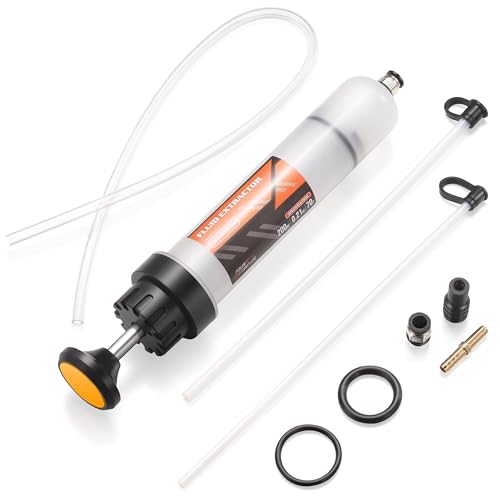
200cc Fluid Extractor and Fill Pump for Automotive Use
This 200cc fluid extractor and fill pump is designed for easy and precise oil changes in cars, motorbikes, boats, and farm equipment. Equipped with extension hoses for hard-to-reach areas and a reliable airtight seal, it ensures quick and mess-free fluid transfer every time.
Key Features:
- Includes two extension hoses that connect to reach up to 23 inches, with caps to prevent spills
- Durable design with double rubber rings and precision threading to ensure an airtight, leak-proof seal
- Quick-connect lock buckle for easy attachment and removal, plus a spare buckle included
- Transparent body with clear measurement markings (mL and oz) for accurate fluid monitoring
- Suitable for use with motor vehicles, boats, farm equipment, brake master cylinders, oil filter housings, and gear boxes
Pros
- Long extension hoses provide easy access to hard-to-reach places
- Secure double-sealed design prevents leakage
- Accurate measurement scale for precise fluid extraction
Cons
- Extension hoses may require careful handling to avoid kinks during use
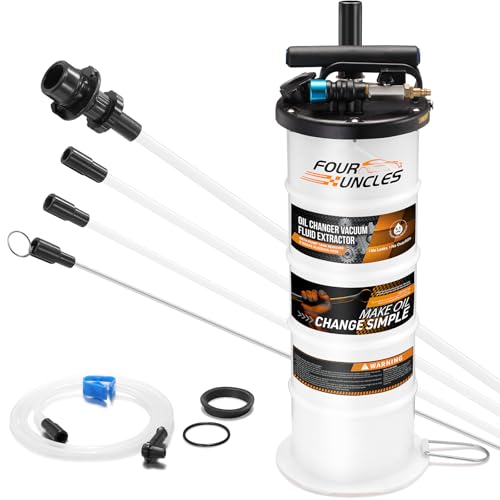
6.5L Pneumatic and Manual Oil Extractor with Brake Bleeding Hose
This 6.5L oil extractor offers both pneumatic and manual modes for flexible and efficient fluid extraction. Designed to quickly and cleanly remove engine oil or brake fluid, it eliminates the need to get under the vehicle. Equipped with multiple tubes to fit different oil pan sizes and an additional brake bleeding hose, it is ideal for cars, boats, trucks, and lawn mowers.
Key Features:
- Dual operation modes: pneumatic for fast extraction and manual for equipment-free use
- Extraction speed up to 1.8 liters per minute, completing an oil change on a 4-cylinder engine in about 5 minutes using pneumatic mode
- Includes main tube plus three differently sized tubes to reach all oil pan types and ensure complete oil removal
- Comes with a brake bleeding hose for effective brake fluid extraction
- Easy to operate without crawling under the vehicle and no mess after fluid change
- Portable design suitable for use in garages or outdoors on various vehicles
Pros
- Versatile pneumatic and manual modes adapt to different work environments
- Fast and thorough oil extraction saves time
- Includes brake bleeding hose for additional functionality
Cons
- Pneumatic mode requires a compatible air compressor
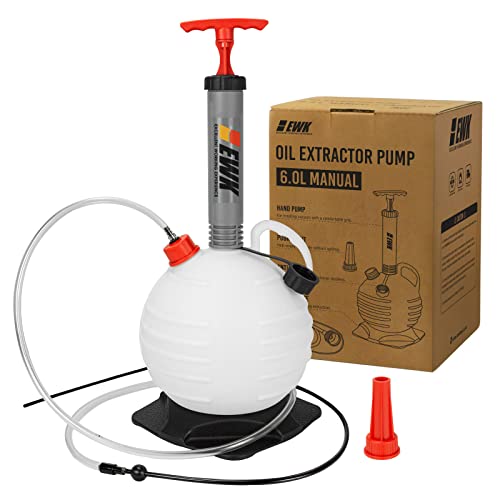
6L Manual Vacuum Oil Extractor Pump for Fast and Clean Oil Changes
This 6-liter manual vacuum oil extractor pump makes oil changes quick and mess-free by sucking oil directly from the dipstick tube. Portable and power-free, it's ideal for DIYers and pros working on cars, motorcycles, boats, and more. With a long hose and probe, it ensures thorough fluid extraction without crawling under the vehicle.
Key Features:
- Clean oil changes by extracting oil from the dipstick tube, avoiding spills and crawling under the vehicle
- Manual operation requires no electricity or compressor, perfect for use anywhere
- Includes a 59-inch clear hose to monitor oil quality and a 42-inch flexible probe for deep fluid extraction
- Sealing cap prevents leaks during transport, and angled spout ensures easy fluid disposal
- Suitable for multiple engine types and fluids such as engine oil, ATF, coolant, and power steering fluid
- Durable construction delivers reliable suction and performance for frequent use
Pros
- Mess-free oil changes without the need to access the drain plug
- Portable and does not require power, making it convenient for various locations
- Long hose and probe allow for thorough fluid extraction from deep inside the engine
Cons
- Not compatible with gasoline or fluids exceeding 175F
- Not suitable for certain vehicle models like Mercedes W212 E350 or C218 CLS350
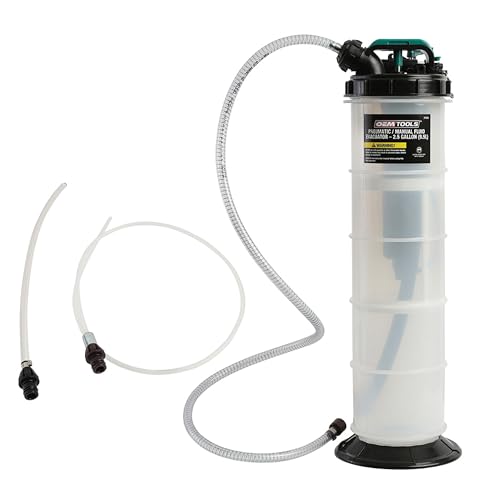
2.5 Gallon Pneumatic and Manual Fluid Extractor Pump
This versatile 2.5 gallon fluid extractor pump efficiently removes oil, coolant, transmission, and power steering fluids using either pneumatic or manual operation. Designed for ease of use and safety, it extracts fluids without needing to remove drain plugs and includes extended hoses for deep reservoir access. Perfect for professionals and DIY enthusiasts alike.
Key Features:
- Dual operation allows switching between pneumatic and manual modes for flexible use.
- Extracts fluids through dipstick tubes or openings without removing drain plugs.
- Automatic shut-off valve stops extraction when tank is full, preventing spills.
- Includes 41-inch dipstick hose adapters and a 5-foot suction hose for hard-to-reach reservoirs.
- Durable 2.5-gallon tank with a large pumping handle designed for frequent use with various automotive fluids.
Pros
- Flexible dual operation suits different work environments.
- Prevents spills with automatic shut-off feature.
- Extended hoses improve accessibility in vehicles.
Cons
- May require occasional maintenance to keep the pump running smoothly.
Ever Wondered What Makes the Best Oil Extractor?
Let's be real: when it comes to making your own oil, whether for cooking or crafts, a solid oil extractor isn't some fancy gadget you endlessly debate about, it's the heart of the process. But choosing the right one? That's where things get a bit trickier. You might think extraction is just squeezing stuff until oil comes out, but there's a whole art and science behind it.
Why Bother With an Oil Extractor? Can't You Just Buy Oil?
You know, grabbing a bottle of cooking oil from the supermarket is easy, no doubt. But making it yourself? That's special. Imagine knowing exactly what's in your oil, no additives, no questionable processing. Plus, if you're passionate about organic or non-GMO, an extractor puts the power in your hands.
Reviews you may find interesting:
8 Best Orbital Sander And Polishers (2026 Review Guide)8 Best Car Wire Strippers (2026 Review Guide)
8 Best Car Seat Cushions (2026 Review Guide)
Also, saving money over time when you often use oil is a nice perk. And hey, some folks just love the process, the smell of fresh seeds heating up, the soothing whirring of the machine, the satisfaction of seeing the leftover husks after pressing. It's oddly therapeutic.
Breaking Down the Basics: How Oil Extractors Work
At its core, an oil extractor crushes or presses raw materials to coax out the oil trapped inside. There are mechanical types, which use strong pressure, and sometimes a bit of heat, to juice out the oil. The process might remind you of wringing out a rag, but way more high-tech, and with finesse.
Some models are manual, think crank-operated, great if you want to keep it unplugged and simple. Others are electric, handling larger batches and making life easier when you're producing oil regularly.
What Should You Look For in the Best Oil Extractor?
- Efficiency: How much oil do you get from a batch? A good extractor minimizes waste.
- Ease of Use: If you dread complicated assembly instructions or a thousand tiny parts, you're not alone. Simplicity wins.
- Cleaning and Maintenance: Nobody loves scrubbing machinery covered in sticky oil. Machines that come apart easily and have dishwasher-safe components score extra points.
- Durability: You want something built to last, because a flimsy frame is a pain and might leak or break down.
- Size and Portability: Are you working in a snug kitchen or a larger workspace? Some models are surprisingly compact.
Talking Performance: What to Expect
You should know that an extractor doesn't just spit out a constant stream of oil. The type of seed or nut matters big time. For example, peanuts often yield more oil and are easier to press compared to harder seeds like sunflower or flax.
And don't overlook pre-treatment, roasting your seeds lightly can boost yield and flavor without complicating the process. Of course, this adds a step, but the richer aroma and smoother oil taste might be worth it.
Let's Chat About Durability and Maintenance
You might be thinking, "I'm just a hobbyist, why fuss about durability?" Well, even casual use calls for machines that hold up after repeated pressing sessions. Plus, oil residue is sticky stuff, it can gum up parts if not cleaned properly. So, easy-to-disassemble models are a lifesaver.
Cleaning isn't glamorous, but it keeps your oil tasting fresh and your extractor running smoothly. A quick tip? Wiping down while the machine's still slightly warm often works wonders.
What's the Verdict on Size and Portability?
Space can be a dealbreaker. Enough said. Some oil extractors look like kitchen blenders, while others resemble mini industrial machines. If you're into making modest amounts for home cooking, smaller, countertop-friendly models make sense. For cottage industries or serious oil crafting, a heavier-duty machine fits the bill.
Quick Recap: Key Takeaways Before You Buy
- Think about how much oil you plan to produce.
- Consider the types of seeds or nuts you'll press most frequently.
- Check how easy the machine is to clean and maintain.
- Make sure it fits the space where you'll keep it.
- Read up on user feedback, real tales often spotlight quirks and strong suits.
Final Thoughts: Is an Oil Extractor Worth It?
Honestly? If you're curious about what's in your oil, want to experiment in the kitchen, or just enjoy the hands-on satisfaction of making something from scratch, an oil extractor is a nifty tool. While it demands some attention and care, but it rewards with fresh, pure oil and a fun kitchen sidekick vibe.
Plus, it's kinda cool telling your friends you pressed your own oil, makes you sound like a craftsperson, right?