6 Best Gas Cans (2026 Review Guide)
The Best Ranked Gas Can
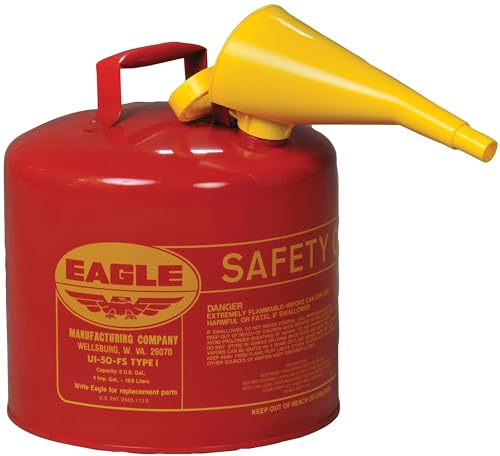
5 Gallon Red Safety Gas Can with Flame Arrester and Self-Closing Lid
This 5-gallon red safety gas can is designed for the safe storage, transport, and dispensing of gasoline and other flammable liquids. Made from durable galvanized steel in the USA, it features a flame arrester, self-closing lid, and an included funnel for easy and spill-free pouring. Built to meet strict safety standards, this gas can offers reliable performance and long-lasting protection.
Key Features:
- Type I design with a single opening for easy filling and pouring of flammable liquids
- Includes a funnel and a gasketed spout cap that self-closes to prevent leaks and spills
- Fixed handle and double interlock bottom seam for durability and secure handling
- Non-sparking flame arrester prevents ignition of liquids and flame spread
- Complies with OSHA 1910.106, NFPA 30, FM, UL, and ULC safety standards
- Made in the USA from corrosion-resistant 24-gauge galvanized steel with a durable powder-coat finish
Pros
- Durable galvanized steel construction with rust and dent resistance
- Safety features include flame arrester and self-closing lid to prevent spills and ignition
- Includes funnel for easy and mess-free pouring
Cons
- Single opening design may limit pouring speed compared to dual-opening cans
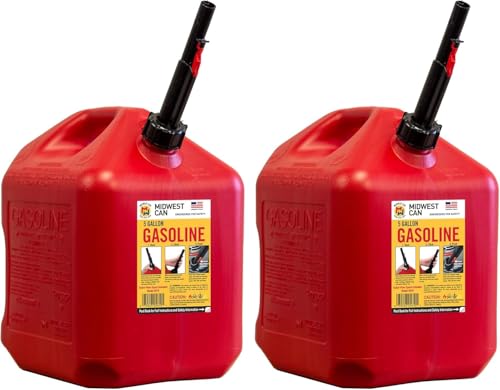
5 Gallon Gas Can Fuel Container with Spout (2 Pack)
This 2-pack of 5-gallon gas cans is designed to safely and conveniently store and dispense fuel for lawnmowers, trimmers, and other outdoor power equipment. Made from durable materials with enhanced safety features, these cans help prevent accidental fires and make refueling quick and easy.
Key Features:
- Holds 5 gallons of fuel each, ideal for outdoor power equipment
- Made from durable HDPE material with a vapor barrier for fuel preservation
- FlameShield system provides dual-layer protection against sparks and fires
- Spout design allows for faster, spill-free fueling
Pros
- Durable construction resists damage and preserves fuel quality
- Built-in safety features reduce risk of fires
- Convenient spout speeds up refueling process
Cons
- May be bulky to carry when full
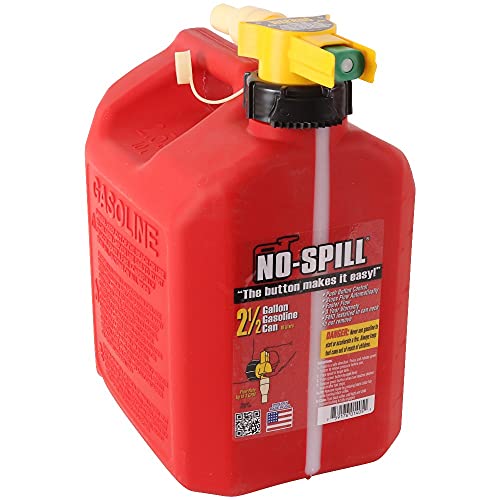
2.5 Gallon No-Spill Gas Can
This 2.5-gallon gas can offers precise, mess-free fuel pouring with its thumb button control, ensuring easy use for smaller equipment. Its 7/8-inch funnel spout fits tight openings, and the attached dust cover keeps the spout clean. Built-in stainless steel screen prevents debris from entering the fuel.
Key Features:
- Thumb button control for precise pouring
- 7/8-inch funnel spout fits small equipment openings
- Attached dust cover to keep spout clean
- Integrated 20-mesh stainless steel screen to filter debris
Pros
- Precise and controlled pouring reduces spills
- Compact spout fits small fuel openings
- Protective dust cover maintains cleanliness
Cons
- Capacity may be limited for larger tasks
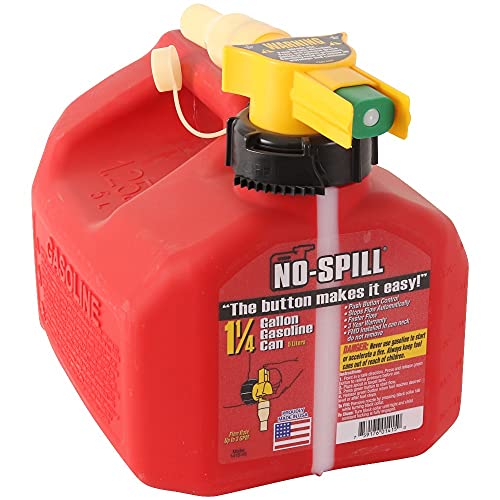
1.25-Gallon No-Spill Poly Gas Can, Red
This 1.25-gallon red poly gas can offers a convenient and safe way to store and transport fuel. Designed to minimize spills, it's an ideal companion for outdoor equipment and emergencies.
Key Features:
- 1.25-gallon fuel capacity
- Durable red polyethylene construction
- No-spill design for easy pouring
- CARB compliant for environmental safety
Pros
- Compact size for easy handling and storage
- Spill-resistant design reduces fuel wastage
- Durable and lightweight material
Cons
- Limited capacity may require multiple refills for larger needs
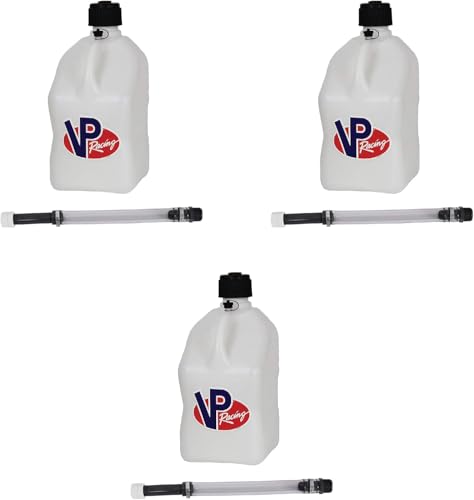
VP Racing 5.5 Gallon White Motorsport Utility Container with Hose (3 Pack)
This 5.5 gallon utility container is designed for non-fuel liquids and materials, making it ideal for motorsports, farm, and outdoor use. Built with durable, reinforced plastic, it offers reliable storage and easy handling with ergonomic grips and vented handles. The included deluxe hose makes dispensing fluids or other materials simple and precise.
Key Features:
- Designed for non-fuel liquids and materials like automotive fluids, animal feed, rock salt, and more
- Versatile container suitable for mixing and dispensing industrial or outdoor products
- Reinforced high-stress areas to prevent cracking and enhance durability
- Made with 30% more material for added strength and wear resistance
- Extra-wide bottom grip for comfortable lifting and stable handling
- Ergonomic handle with venting for easy and precise pouring
Pros
- Durable construction withstands tough conditions
- Ergonomic design ensures comfortable handling and pouring
- Versatile use across motorsports, farm, and outdoor applications
Cons
- Not suitable for fuel storage or kerosene
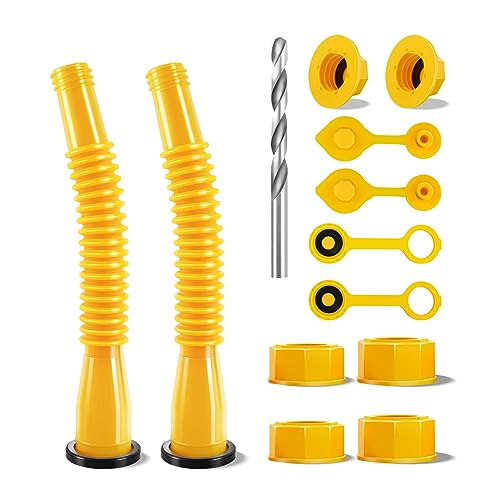
Gas Can Spout Replacement Kit with Flexible Nozzles and Vent Caps
This gas can spout replacement kit offers durable and flexible nozzles compatible with most 1/2, 5, and 10-gallon gas cans. Designed to prevent spills and ensure easy pouring, the kit includes various vent caps to fit different types of cans. Installation is simple with all necessary parts and tools included, making it a convenient solution for maintaining or upgrading your gas cans.
Key Features:
- Fits most 1/2, 5, and 10-gallon gas cans with openings between 1.7 and 1.82 inches
- 8.1-inch flexible hose allows for easy pouring from different angles
- Made from high-quality HDPE for durability and resistance to breaking
- No-spill threaded nozzle caps with rubber seals for secure closure and mess-free use
- Includes two types of vent caps to fit cans with or without built-in vents
- Complete kit with four screw collar caps (coarse and fine threads), two hoses, gaskets, nozzle caps, vent caps, and a drill bit for vent cap installation
Pros
- Wide compatibility with various gas can sizes
- Flexible and durable hoses prevent breakage
- No-spill design keeps refueling clean and safe
- Comes with all necessary parts and tools for easy installation
Cons
- Vent cap A requires drilling for installation, which may be inconvenient for some users
Why Your Gas Can Choice Matters More Than You Think
Anyone who's ever been stuck mid-project with an empty fuel tank knows the pain of not having the right gas can. But it's not just about convenience. That little container holds something quite volatile, gasoline. So picking the right one isn't just a matter of size or price, it's about safety, durability, and just plain peace of mind.
Understanding Gas Can Basics: What's Under the Hood?
Let's start by breaking down what makes a quality gas can. You might think it's just a plastic jug with a spout, but there's more finesse beneath the surface. The material, usually high-density polyethylene or steel, affects the can's resistance to chemicals and wear. Then there's the design, venting mechanism, spout style, handle comfort, all playing a role in how easily and safely you can transfer fuel.
Imagine trying to pour gas into your lawnmower with a flimsy can that dribbles everywhere or emits a stream that's way too fast. Nightmare, right? The right design prevents spills, reduces fumes, and can even make your day just that little bit easier.
Reviews you may find interesting:
8 Best Lumbar Support For Car Seats (2026 Review Guide)7 Best Car Code Readers (2026 Review Guide)
7 Best Bi-Directional OBD-II Scanners (2026 Review Guide)
Not Just Any Red Can Will Do: Color Matters
Here's a detail that often gets overlooked: the color coding of fuel cans. It's not just an aesthetic choice; it's a safety feature. Traditionally, red means gasoline, blue is for kerosene, yellow for diesel, and green often marks other fuels or oils.
Why is this important? Because mixing fuels can wreck your equipment and cost you dearly. You wouldn't put diesel in a gasoline engine, and the can color helps prevent that slip-up. So, if your tools, generators, or vehicles use different fuels, keeping color-coded cans around isn't just handy, it's smart.
Features to Look For: Comfort and Confidence in Every Pour
When you're staring at a dozen options online or in a store aisle, it's easy to get overwhelmed. But a few features can help narrow things down:
- Spout Design: Look for no-spill spouts or those with flexible tips to reach tight openings.
- Ventilation: A vented can allows smoother pouring without glugging sounds or sudden spurts.
- Durability: Thick, sturdy walls resist punctures and stand up to rough handling outdoors.
- Seal Quality: A good cap locks tight, preventing leaks and holding in fumes.
- Ergonomics: Comfortable handles make carrying and pouring less of a workout.
Honestly, these elements make a tangible difference. You don't realize how frustrating a leaky or hard-to-pour can is until you've dealt with one.
Safety First: Storing and Handling Your Gas Can
Gasoline isn't just flammable; it's downright fickle. Leaving cans out in the sun or near sparks? That's a recipe for disaster. How you store your fuel matters as much as the can itself.
Keep your gas cans in a well-ventilated, cool spot out of reach of kids and pets. Avoid storing them inside the house or garage near appliances that generate heat or sparks. And here's a nugget of practical wisdom, use fresh fuel, and never combine old gas with new. Fuel degrades, and that can lead to engine troubles.
When Size Becomes a Balancing Act
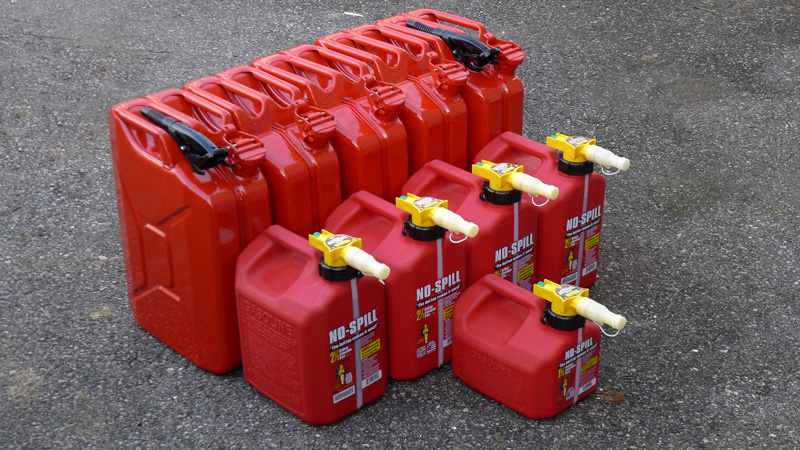
You might think the biggest gas can is always better, more fuel equals less frequent refills, right? Not exactly. While larger cans (like 5-gallon models) are popular for generators or long trips, they're heavier and more unwieldy when full. Smaller cans, on the other hand, are easier to handle but require more frequent refills.
Here's where personal preference and use case come in. Need fuel for a quick lawn mower job? Maybe a 1-gallon can does the trick. Planning a camping weekend with a portable stove or generator? Then a bigger container makes sense.
You Know What? Accessories Can Be Game-Changers
Spill-proof funnels, fuel stabilizers, and sturdy holders might sound like niche extras, but they can make your whole fueling experience better. Funnels help avoid messes when refilling, stabilizers keep fuel fresh longer, and holders secure your cans while driving.
Think of them as small helpers that keep frustration at bay and safety at the forefront. Sometimes, it's these little details that transform an ordinary task into a smooth, worry-free routine.
Wrapping It Up: Your Gas Can Should Be More Than Just a Container
At the end of the day, a gas can is a trusted companion during so many projects, from gardening to road trips, snowblowing to power generation. Choosing the right one means fewer accidents, less hassle, and a little more confidence every time you lift that spout.
So next time you find yourself scanning labels or comparing features, remember: the right gas can is the one that fits your gear, feels comfortable in your hands, and gives you that small, but meaningful, peace of mind.